Water
Governing water resources in a sustainable way is key to healthy ecosystems and equitable and sustainable societies. At Ecologic Institute, an interdisciplinary team analyzes water-related challenges and develops cross-cutting approaches to protect water ecosystems and ensure sustainable water use, in Europe and beyond.
The water team at Ecologic Institute has profound experience in research and policy advice to enhance management and governance on a wide range of water-related issues. This includes evaluating and developing strategies to cope with the effects of climate change on water resources and water-related extreme events. Another field of expertise is assessing aquatic biodiversity and the impact of pollutants on water bodies. Furthermore, our team conducts economic policy assessments, analyzes markets, and evaluates the potential of digitalization for sustainable water management. The water team is also experienced in developing strategies for stakeholder involvement and effective communication to tackle water-related challenges.
Ecologic Institute is represented in national and European fora, where it engages in deep debate and knowledge exchange on topics such as coasts and marine waters.
Ecologic Institute's Water Team has profound experience in research and policy advice on the following water-related topics:
European Water Governance and Management
The Water Team advises and researches on issues of water management and governance at the national and European level. This includes support for the implementation of the European Water Framework Directive (WFD).
Water and Adaptation
Team members develop adaptive management and governance strategies to tackle issues related to flood, drought, and water scarcity. This includes designing nature-based solutions as well as participatory approaches to these challenges.
Aquatic Biodiversity
Team members conduct studies to evaluate the state of freshwater ecosystems and develop approaches to assess measures to enhance their quality.
Aquatic Pollutants
Team members evaluate the influence of pollutants (such as pharmaceuticals, emerging pollutants and micro-plastics) on water bodies and develop innovative management tools.
Water Economics
Team members conduct evaluations of economic policy instruments for water management and apply methodologies for the economic analysis of water use in Europe. In addition, team members perform impact assessments to reach Good Ecological Status of European water bodies according to the Water Framework Directive (WFD).
Innovation and Digitalization
Team members analyze markets and evaluate the potential of digitalization and innovation to solve complex water management challenges.
Communication and Participation
The Water Team is advancing effective communication of water issues between citizens, science and policy using crosscutting formats and approaches. In addition, the team members have experience in involving stakeholders in co-designing solutions for water-related challenges.
Contact


Related Topics








Selected Projects for Water
Implementing Nature-based Solutions for Water Retention and Climate Resilience in Europe (SpongeWorks)
- Duration
-
-
- Funding
-
European Climate, Infrastructure and Environment Executive Agency (CINEA), International
Water Stewardship in German Agriculture
- Duration
-
-
- Funding
-
PANDA Fördergesellschaft für Umwelt, Germany
Governance Innovations for a Transition to Sustainable and Equitable Water Use in Europe (GOVAQUA)
- Duration
-
-
- Funding
-
European Commission, Directorate-General Research & Innovation (DG Research & Innovation), International
Modelling Restoration of Wetlands for Carbon Pathways, Climate Change Mitigation and Adaptation, Ecosystem Services, and Biodiversity, Co-benefits (RESTORE4Cs)
- Duration
-
-
- Funding
-
European Commission, Directorate-General Research & Innovation (DG Research & Innovation), International
Restoration of the Danube River Basin Waters for Ecosystems and People from Mountains to Coast (DANUBE4all)
- Duration
-
-
- Funding
-
European Commission, Directorate-General Research & Innovation (DG Research & Innovation), International
Mission Ocean, Seas and Waters Implementation Support Platform
- Duration
-
-
- Funding
-
European Climate, Infrastructure and Environment Executive Agency (CINEA), International
Adaptation of Stormwater Management to Extreme Weather Events (AMAREX)
- Duration
-
-
- Funding
-
Federal Ministry of Education and Research (BMBF), Germany
Sustainable Management of the Landscape Water Balance to Increase Climate Resilience (KliMaWerk)
- Duration
-
-
- Funding
-
Federal Ministry of Education and Research (BMBF), Germany
European Topic Centre on Inland, Coastal and Marine Waters (ETC-ICM)
- Duration
-
-
- Funding
-
European Environment Agency (EEA), International
Digital Water City – Leading urban water management to its digital future (DWC)
- Duration
-
-
- Funding
-
European Commission, Directorate-General Research & Innovation (DG Research & Innovation), International European Commission, Executive Agency for Small and Medium-sized Enterprises (EASME), International
Potential of Other Legal Areas to Achieve the Objectives of the Water Framework Directive
- Duration
-
-
- Funding
-
German Environment Agency (UBA), Germany
Third Cycle of the German Participatory Forum on Fish Protection and Downstream Migration
- Duration
-
-
- Funding
-
German Environment Agency (UBA), Germany
Nature Based Solutions for Water Security in Europe (NBS4WS)
- Duration
-
-
- Funding
-
The Nature Conservancy (TNC), International
A farmer advisor and an Ecologic Institute staff member inspect a field planted with catch crops in the Lower Rhine region.
|© Rodrigo Vidaurre
Fish Friendly Innovative Technologies for Hydropower (FIThydro)
- Duration
-
-
- Funding
-
European Commission, Directorate-General Research & Innovation (DG Research & Innovation), International
Framework Contract on Evaluation, Review and Development of EU Water Policy
- Duration
-
-
- Funding
-
European Commission, Directorate-General Environment (DG Environment), International
Providing Support to the Assessment of the Water Framework Directive and Floods Directives's Plans and Implementation
- Duration
-
-
- Funding
-
European Commission, Directorate-General Environment (DG Environment), International
Demonstrate Ecosystem Services Enabling Innovation in the Water Sector (DESSIN)
- Duration
-
-
- Funding
-
European Commission, Directorate-General Research & Innovation (DG Research & Innovation), International
Knowledge, Assessment, and Management for Aquatic Biodiversity and Ecosystem Services Across EU Policies (AQUACROSS)
- Duration
-
-
- Funding
-
European Commission, Directorate-General Research & Innovation (DG Research & Innovation), International
Integrated Water Resource Management and Climate Change Adaptation
- Duration
-
-
- Funding
-
The Leverhulme Trust, United Kingdom
Framework Contract to Support the Development and Implementation of EU Freshwater Policies
- Duration
-
-
- Funding
-
European Commission, Directorate-General Environment (DG Environment), International
Benefit of Governance in Drought Adaption (DROP)
- Duration
-
-
- Funding
-
European Commission, Directorate-General for Climate Action (DG Climate), International
Making Society an Active Participant in Water Adaptation to Global Change (BeWater)
- Duration
-
-
- Funding
-
European Commission, Directorate-General Research & Innovation (DG Research & Innovation), International
Sharing Water-related Information to Tackle CHanges in the Hydrosphere – for Operational Needs (SWITCH-ON)
- Duration
-
-
- Funding
-
European Commission, Directorate-General Research & Innovation (DG Research & Innovation), International
Restoring River for Effective Catchment Management (REFORM)
- Duration
-
-
- Funding
-
European Commission, Directorate-General Research & Innovation (DG Research & Innovation), International
Biodiversity of Freshwater Ecosystems: Status, Trends, Pressures, and Conservation Priorities (BioFresh)
- Duration
-
-
- Funding
-
European Commission, Directorate-General Research (DG Research), International
Evaluating Economic Policy Instruments for Sustainable Water Management in Europe (EPI-Water)
- Duration
-
-
- Funding
-
European Commission, Directorate-General Research & Innovation (DG Research & Innovation), International
Selected Publications for Water
Penttilä, O. et al. 2024: GOVAQUA policy matrix Part C – Regulating value chains and sustainable water footprints. Ecologic Institute: Berlin.
Rouillard, Josselin et al. 2024: GOVAQUA policy matrix Part A – Review of national water allocation policies in six European countries. Ecologic Institute: Berlin.
Kampa, Eleftheria et al. 2024: GOVAQUA policy matrix Part B – Review of national eflows policies in six European countries. Ecologic Institute: Berlin.
Lago, M., McDonald, H. (2024). Overcoming Barriers to Pondscape Nature-Based Solutions. A synthesis and final PONDERFUL Framework. PONDERFUL Project (EU Horizon 2020 GA no. ID869296), Deliverable D1.6
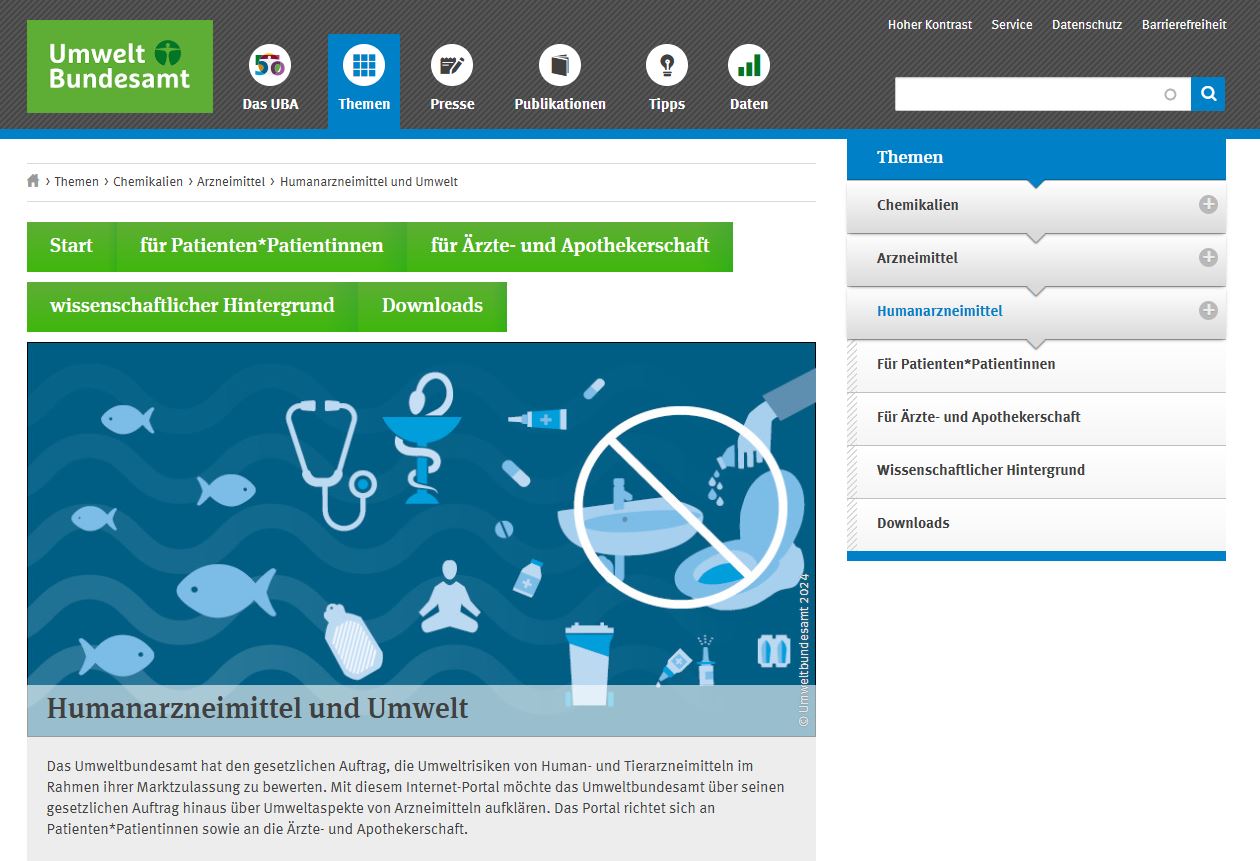
German Environment Agency (Ed.) 2025: Pharmaceuticals and the Environment. Internet portal. Dessau-Roßlau. URL: www.uba.de/en/hmp
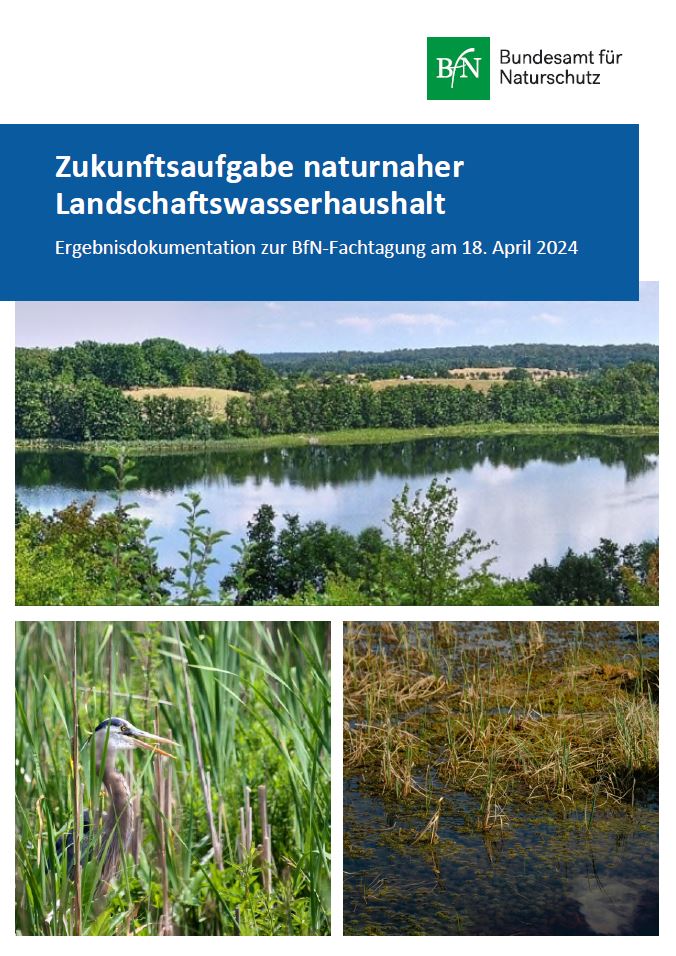
Bundesamt für Naturschutz (Hrsg.) (2024): Zukunftsaufgabe naturnaher Landschaftswasserhaushalt. Ergebnisdokumentation zur BfN-Fachtagung am 18. April 2024. Bonn.
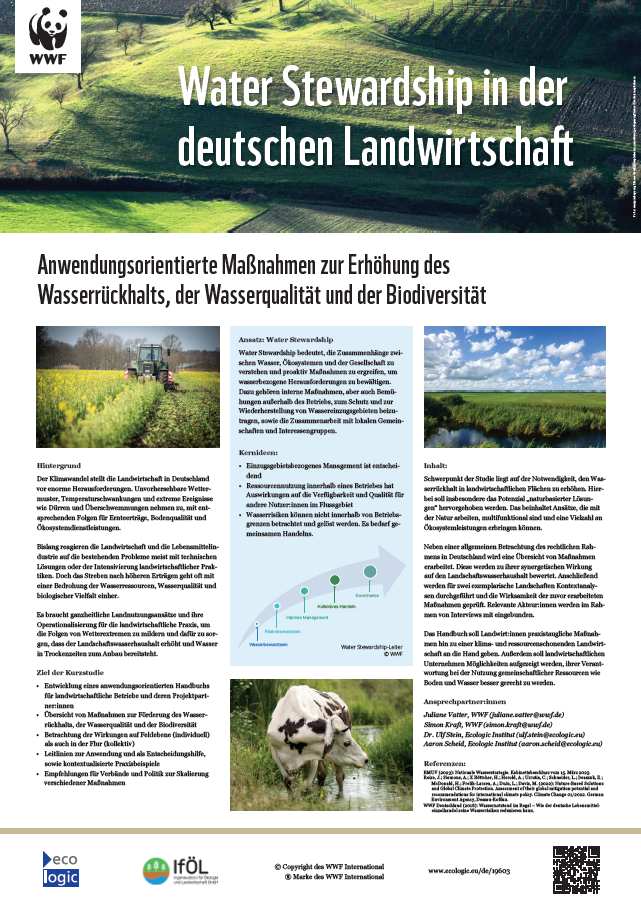
Ecologic Institute 2024: Water Stewardship in der deutschen Landwirtschaft. Anwendungsorientierte Maßnahmen zur Erhöhung des Wasserrückhalts, der Wasserqualität und der Biodiversität. Poster.
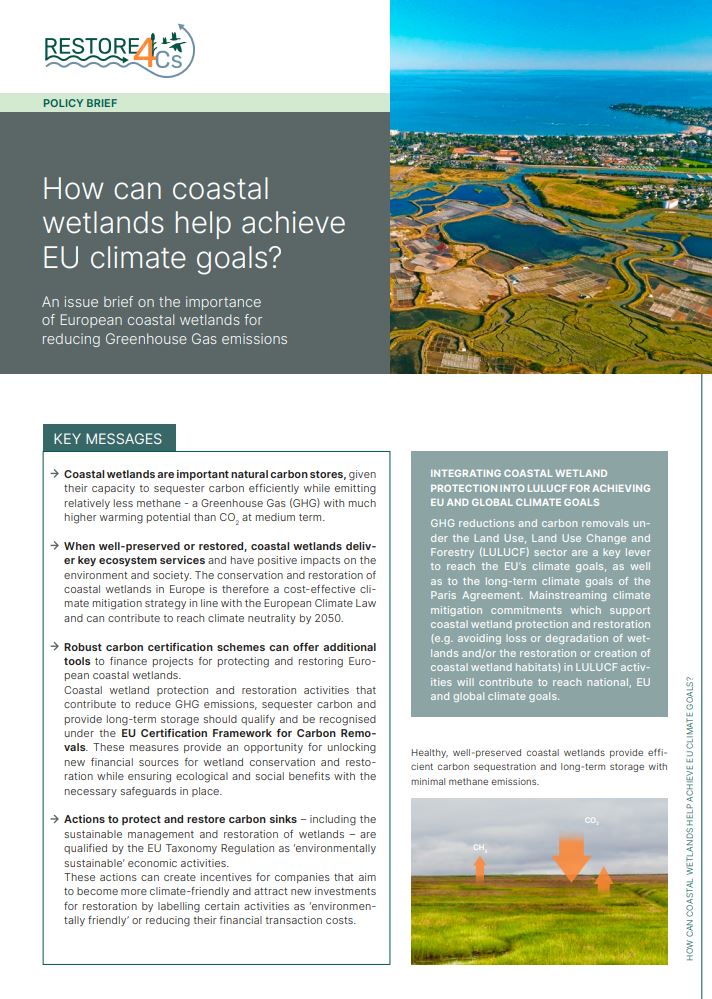
Otero, M., Camacho, A., Abdul Malak, D., Kampa, E., Scheid, A., Elkina, E., 2024. How can coastal wetlands help achieve EU climate goals? Policy Brief. Restore4Cs project.
European Environment Agency (ed.) 2024: Europe's state of water 2024. The need for improved water resilience. EEA Report No 07/2024. Luxembourg: Publications Office of the European Union
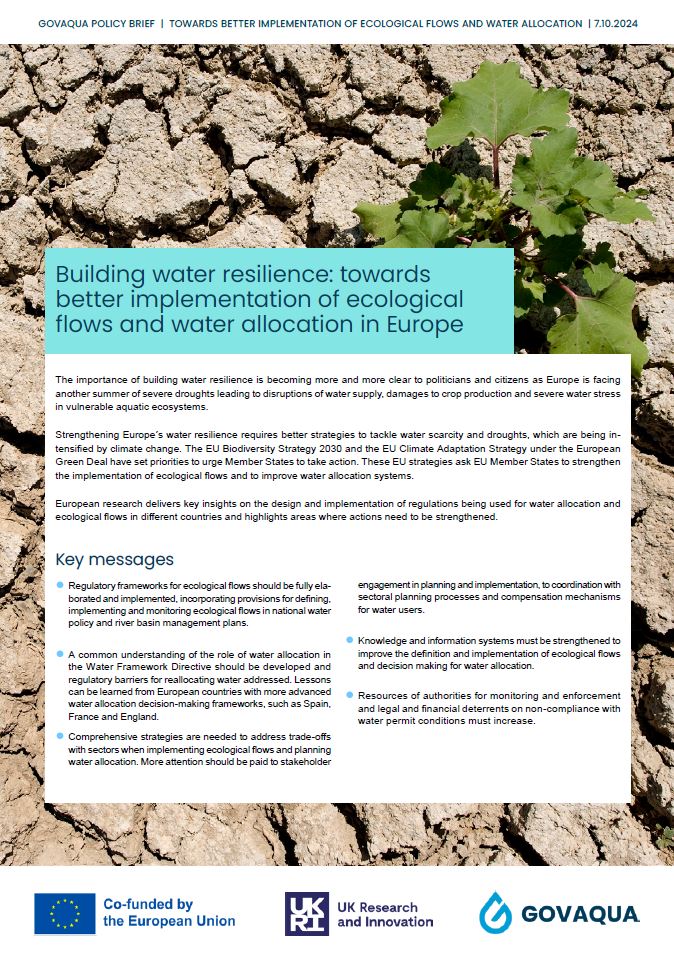
Rouillard, Josselin et al. 2024: Building water resilience: Towards better implementation of ecological flows and water allocation in Europe. GOVAQUA Policy Brief. Finnish Environment Institute: Helsinki.
Stein, Ulf et al. 2024: Auswirkung des Klimawandels auf die Wasserverfügbarkeit − Anpassung an Trockenheit und Dürre in Deutschland (WADKlim). Abschlussbericht. Umweltbundesamt: Dessau-Roßlau. UBA TEXTE 143/2024
Schmidt, Guido et al. (2023). Stock-taking analysis and outlook of drought policies, planning and management in EU Member States. Final report under contract “Technical and scientific support to the European Drought Observatory (EDO) for Resilience and Adaptation - Lot 2: In-depth assessment of drought management plans and a report on climate adaptation actions against drought in different sectors” (ENV/2021/OP/0009) for the European Commission, Directorate-General for Environment.
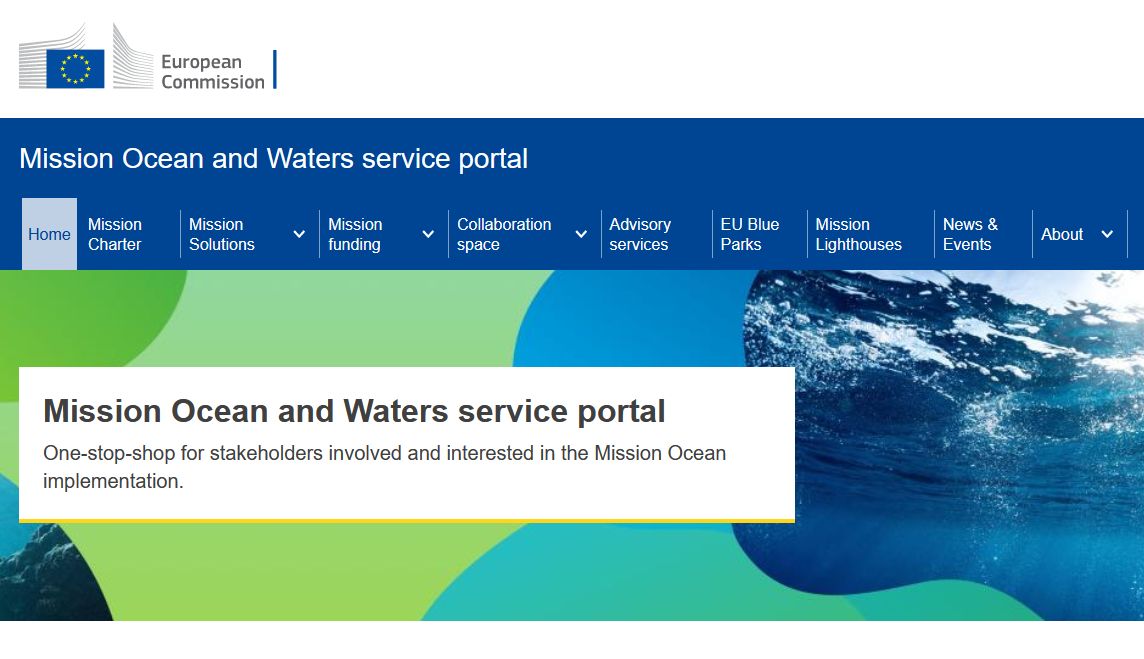
European Commission 2023: Mission Ocean and Waters service portal. Online: https://ec.europa.eu/research-and-innovation/en/funding/funding-opportu…
European Water Policy
European Commission (ed.) 2019: FAQ note on the links between the Nature Directives and the Nitrates Directive.
CIS working group ECOSTAT 2020: Guidance No 37 – Steps for defining and assessing ecological potential for improving comparability of Heavily Modified Water Bodies.
European Commission (ed.) 2019: Report from the Commission to the European Parliament and the Council on the implementation of the Water Framework Directive (2000/60/EC) and the Floods Directive (2007/60/EC). Second River Basin Management Plans. First Flood Risk Management Plans. Brussels
Water Governance and Management
Pahl-Wostl, C., Knieper, C., Lukat, E., Meergans, F., Schoderer, M., Schütze, N., Schweigatz, D., Dombrowsky, I., Lenschow, A., Stein, U., Thiel, A., Tröltzsch, J. and Vidaurre, R. 2020: Enhancing the capacity of water governance to deal with complex management challenges: A framework of analysis. Environmental Science & Policy, 107, pp.23-35.
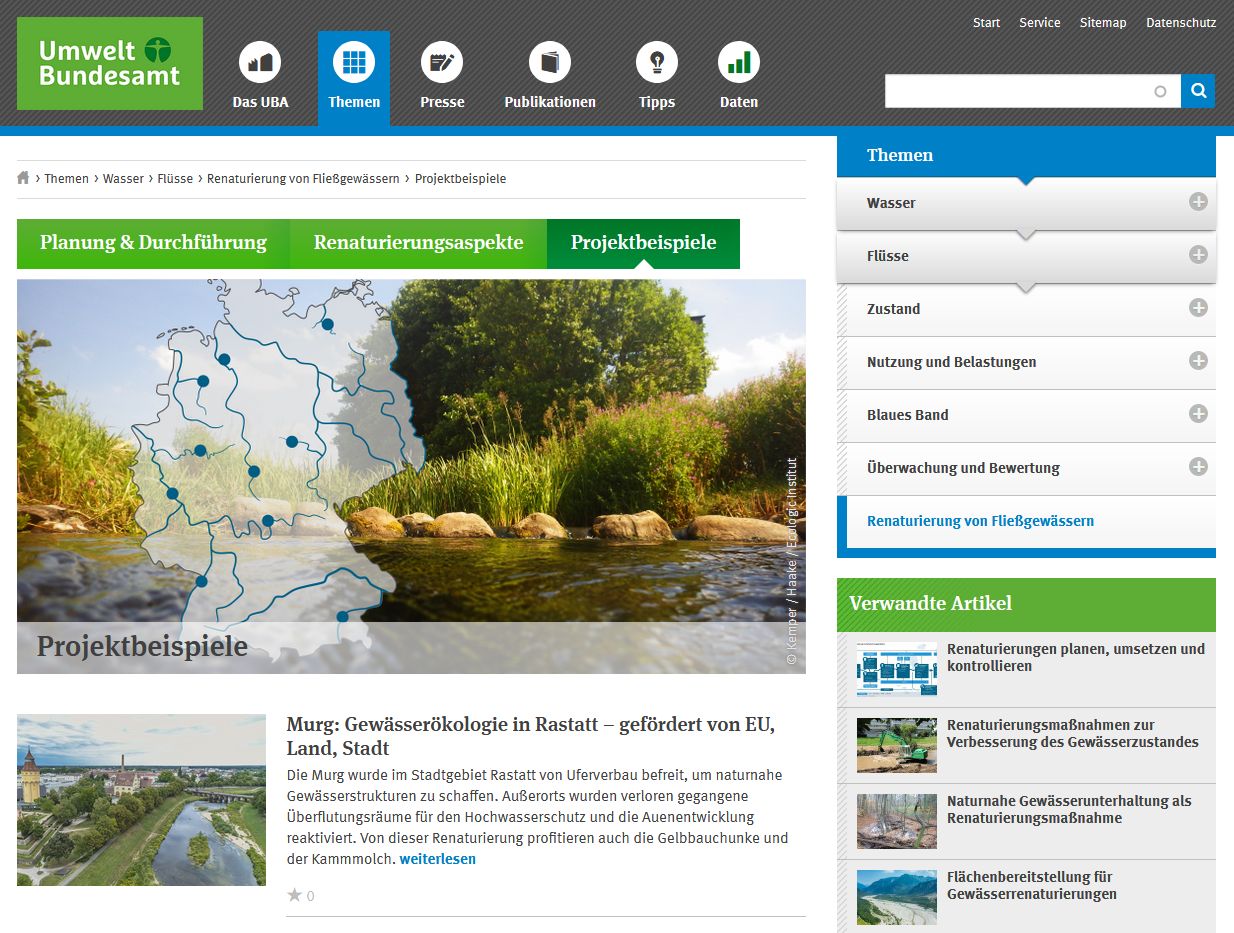
German Environment Agency (ed.) 2019: Renaturierung von Fließgewässern. Internetportal compiled by Kemper M., Lamberty G., Wagner F. and Zumbroich T. on behalf of the German Environment Agency, Dessau-Roßlau. URL: www.uba.de/renaturierung
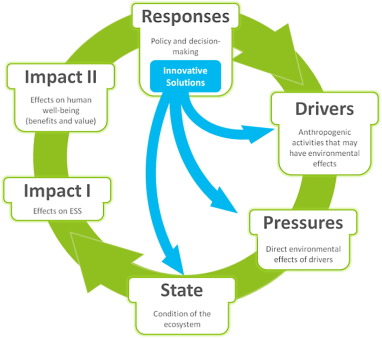
Anzaldua, Gerardo et. al. (2018). Getting into the water with the Ecosystem Services Approach: The DESSIN ESS evaluation framework. Ecosystem Services.
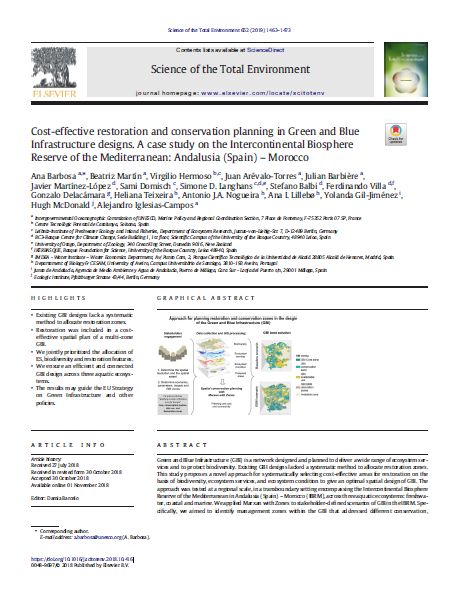
Barbosa, Ana et. al. 2018: Cost-effective restoration and conservation planning in Green and Blue Infrastructure designs. A case study on the Intercontinental Biosphere Reserve of the Mediterranean: Andalusia (Spain) – Morocco. In: Science of the Total Environment, 652 (2019), 1463–1473.
Water and Adaptation
Stein, Ulf and Ruta Landgrebe 2019: European Actors and Institutions Involved in Water Scarcity and Drought Policy. In: La Jeunesse, Isabelle and Corinne Larrue (eds.): Facing Hydrometeorological Extreme Events: A Governance Issue. John Wiley & Sons: Hoboken, New Jersey. 157-170pp.
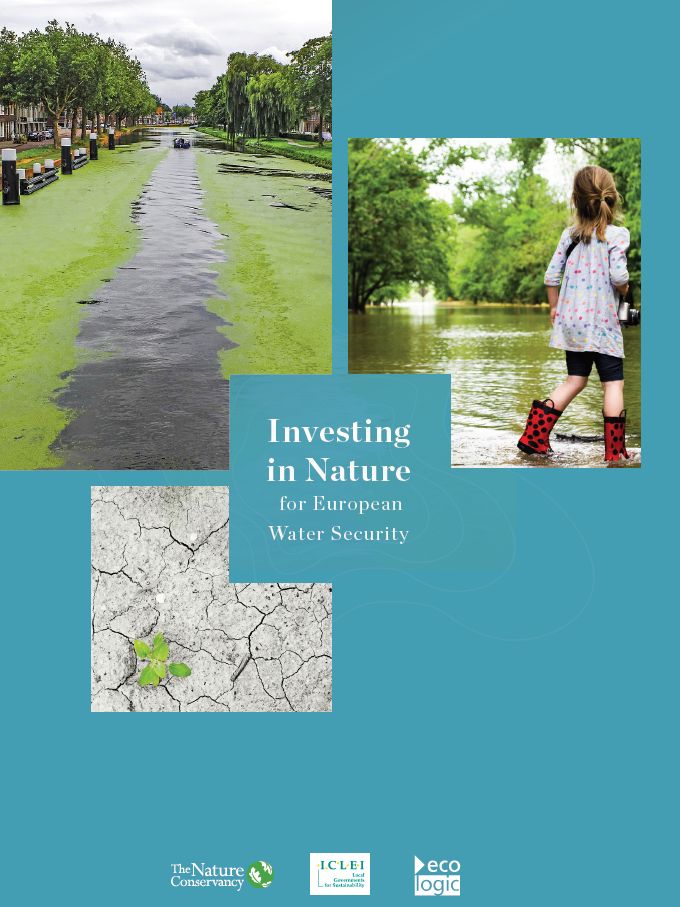
Trémolet S. et al. (2019). Investing in Nature for Europe Water Security. The Nature Conservancy, Ecologic Institute and ICLEI. London, United Kingdom.
Aquatic Biodiversity
Naumann, Stephan, Ulf Stein and Hannes Schritt 2019: Forum Fischschutz und Fischabstieg – Ergebnisse und Diskussion. In: WasserWirtschaft 2019, 10, 36-39.
Piet, Gerjan et al. 2018: Case Study 1 Report: Trade-Offs in Ecosystem-Based Fisheries Management in the North Sea Aimed at Achieving Biodiversity Strategy Targets. WUR: Wageningen.
Rouillard, J., Lago, M., Abhold, K. et al. 2018: Protecting aquatic biodiversity in Europe: How much do EU environmental policies support ecosystem-based management? Ambio (47)1. doi:10.1007/s13280-017-0928-4
Aquatic Pollutants
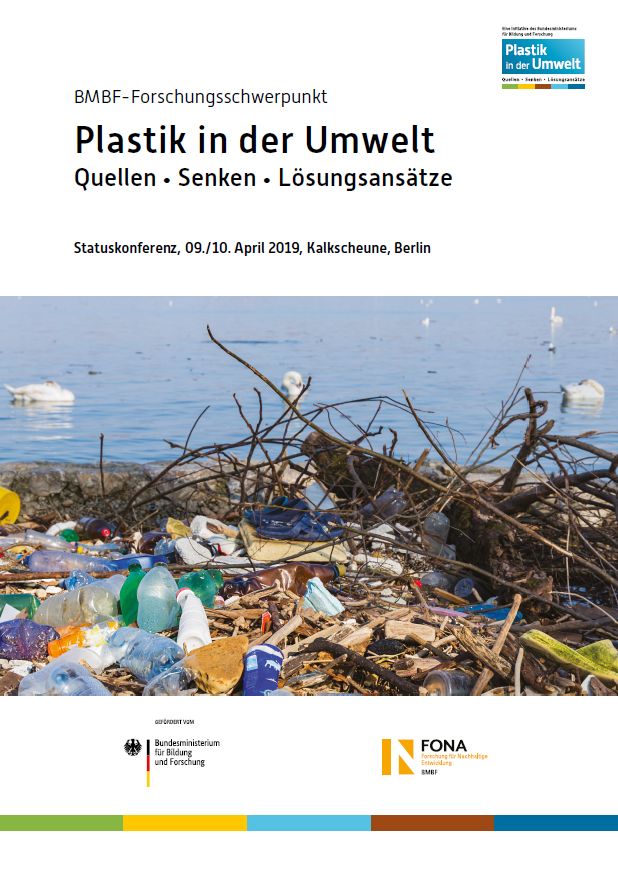
Ecologic Institute (ed.) 2019: BMBF-Forschungsschwerpunkt Plastik in der Umwelt – Quellen • Senken • Lösungsansätze. Statuskonferenz, 09./10. April 2019, Kalkscheune, Berlin. Berlin: Ecologic Institute.
Kemper, Melanie et. al. 2018: Kommunikationsstrategien zur Verminderung von Tierarzneimitteleinträgen aus der Landwirtschaft in die Umwelt. Abschlussbericht. Umweltbundesamt: Dessau-Roßlau.
Ulf Stein et. al (2018): Challenges and technological approaches for tackling emerging contaminants in drinking and wastewater. DOI: 10.5281/zenodo.2452190
Water Economics
Gorm Dige, Gloria De Paoli, Pierre Strosser, Gerardo Anzaldua, Andrew Ayres, Marlene Lange, Manuel Lago, Frans Oosterhuis, Mojca Hrabar, Stale Navrud 2013: Assessment of cost recovery through water pricing. ISBN: 978-92-9213-409-9, ISSN: 1725-2237.
Lago, M., Mysiak, J., Gómez, C.M., Delacámara, G., Maziotis, A. (Eds.) 2015: Use of Economic Instruments in Water Policy. Insights from International Experience. Heidelberg: Springer International Publishing.
Selected Events for Water
Conference:The Future Task of Near-natural Landscape Water Balance
- Date
-
- Location
- Bonn, Germany
Workshop:Webtool Prototype Testing in the AMAREX Project
- Date
-
-
- Location
- Berlin and Cologne, Germany
Conference:Impacts of Climate Change on Water Availability
- Date
-
- Location
- Berlin, Germany
Workshop:Measures to Increase the Climate Resilience of Water Bodies and the Landscape Water Balance
- Date
-
- Location
- Wesel, Germany
Water Governance and Management
Workshop:Integrated Water Resource Management: Comparative Learning on Governance and Public Participation
- Date
-
-
- Location
- Dhaka and Khulna, Bangladesh
Water and Adaptation
Conference:River Basin Adaptation Planning through Stakeholder Engagement
- Date
-
- Location
- Brussels, Belgium
Workshop:Engaging Citizens in Adaptive River Basin Management in the Mediterranean
- Date
-
- Location
- Rmel (Tunisia), Tordera (Spain), Pedieos (Cyprus) and Vipava (Slovenia) river basins
Workshop:7th Workshop on Fish Protection and Downstream Migration
- Date
-
-
- Location
- Dresden, Germany
Protection of Aquatic Biodiversity
Conference:Ecosystem-Based Management for the Protection of Aquatic Biodiversity – AQUACROSS Final Conference
- Date
-
-
- Location
- Brussels, Belgium
Workshop:FIThydro – European Stakeholder Workshop
- Date
-
-
- Location
- Brussels, Belgium
Water Economics
Conference:First EPI-Water Conference in Berlin
- Date
-
-
- Location
- Berlin, Germany