Biodiversity
Ensuring the health of ecosystems and the species contained therein is vital to ensuring societal well-being and a sustainable economic recovery. Yet many of these ecosystems are threatened by human-induced pressures, including pollution, habitat degradation, and urbanization, as well as by climate change. Ecologic Institute works to safeguard biodiversity against these and other threats through its activities. Specific contributions include policy support (e.g. policy assessments, recommendation provisioning, data collection, and analysis) as well as activities to increase societal awareness, capacities, and engagement. The team further supports the delivery of the Sustainable Development Goals and the mainstreaming of biodiversity considerations into other sectoral policies, such as water, agriculture, and climate. Team members have specific expertise in the EU Biodiversity Strategy and Birds and Habitats Directives, Natura 2000 management, and the global UN Convention on Biological Diversity (CBD).
Specifically, Ecologic Institute supports, for example, the effective implementation of environmental policies related to biodiversity, the improvement of coherence and quality of data use or the integration of socio-cultural ecosystem services into green urban planning. Another focus is the research and use of the multifunctional potential of green and blue infrastructure for biodiversity and the provision of ecosystem services.












Selected Projects for Biodiversity
Legal Options for Biodiversity Protection
- Duration
-
-
- Funding
-
Federal Agency for Nature Conservation (BfN), Germany
Mainstreaming Climate and Biodiversity Objectives in EU International Funding Programmes in the Post-2027 Period
- Duration
-
-
- Funding
-
European Commission, Directorate-General for Climate Action (DG Climate), International
GoNaturePositive!
- Duration
-
-
- Funding
-
European Commission, Directorate-General Research & Innovation (DG Research & Innovation), International
Bild von Gerd Altmann auf Pixabay
https://pixabay.com/de/illustrations/europa-wiese-gr%C3%BCn-green-deal-4689510/
Mainstreaming Climate and Environmental Objectives in EU Funding Programmes in the Post-2027 Period
- Duration
-
-
- Funding
-
European Commission, Directorate-General for Climate Action (DG Climate), International
Knowledge Transfer and Competence Building: Education for sustainable environmental management
- Duration
-
-
- Funding
-
Technische Universität Dresden (TU Dresden), Germany
Support to the European Topic Center on Biodiversity and Ecosystems (ETC-BE)
- Duration
-
-
- Funding
-
European Environment Agency (EEA), International
Analytical and Technical Support During the Negotiations Process for the Nature Restoration Law
- Duration
-
-
- Funding
-
European Commission, Directorate-General Environment (DG Environment), International
Climate Adaptation Naturally!
- Duration
-
-
- Funding
-
German Environment Agency (UBA), Germany
Implementation of the National Peatland Protection Strategy (MoorNet)
- Duration
-
-
- Funding
-
Federal Agency for Nature Conservation (BfN), Germany
Innovative Agricultural Interventions to Reach EU Biodiversity and Climate Objectives
- Duration
-
-
- Funding
-
European Environment Agency (EEA), International
Marine Systems Approaches for Biodiversity Resilience and Ecosystem Sustainability (HEU Marine SABRES)
- Duration
-
-
- Funding
-
European Commission, Directorate-General Research & Innovation (DG Research & Innovation), International

Nature's Integration in Cities' Hydrologies, Ecologies and Societies (NICHES)
- Duration
-
-
- Funding
-
Federal Ministry of Education and Research (BMBF), Germany VDI/VDE Innovation + Technik, Germany
Mangrove seedlings growing in Tanjung Puting National Park, West Kalimantan, Indonesia.
|Photo by Daniel Murdiyarso/CIFOR, 2.0 Generic (CC BY-NC-ND 2.0)
Strategic Support for the UN Decade for Ecosystem Restoration
- Duration
-
-
- Funding
-
Deutsche Gesellschaft für Internationale Zusammenarbeit (GIZ), Germany
Using Urban Development Funding to Promote Biodiversity (BioVibeS)
- Duration
-
-
- Funding
-
Federal Agency for Nature Conservation (BfN), Germany
Selected Publications for Biodiversity
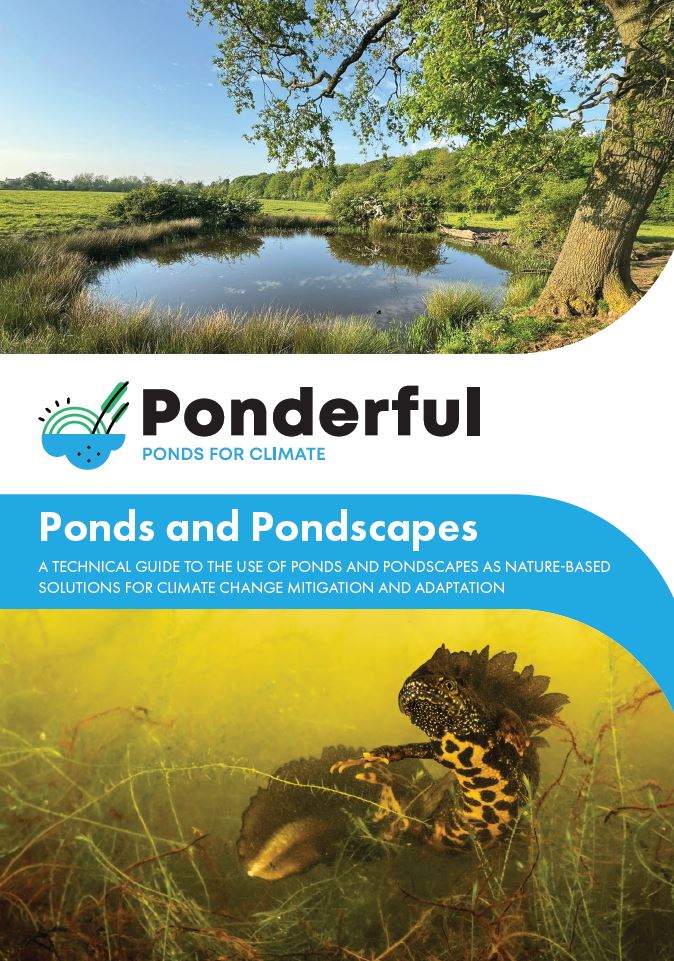
Biggs, J., Hoyle, S., Matos, I., McDonald, H., Nicolet, P., Oertli, B., Teixeira, J. (2024). Ponds and pondscapes: a technical guide to the use of ponds and pondscapes as nature-based solutions for climate change mitigation and adaptation, EU Horizon 2020 Ponderful project, University of Vic – Central University of Catalonia. https://doi.org/10.5281/zenodo.13844497
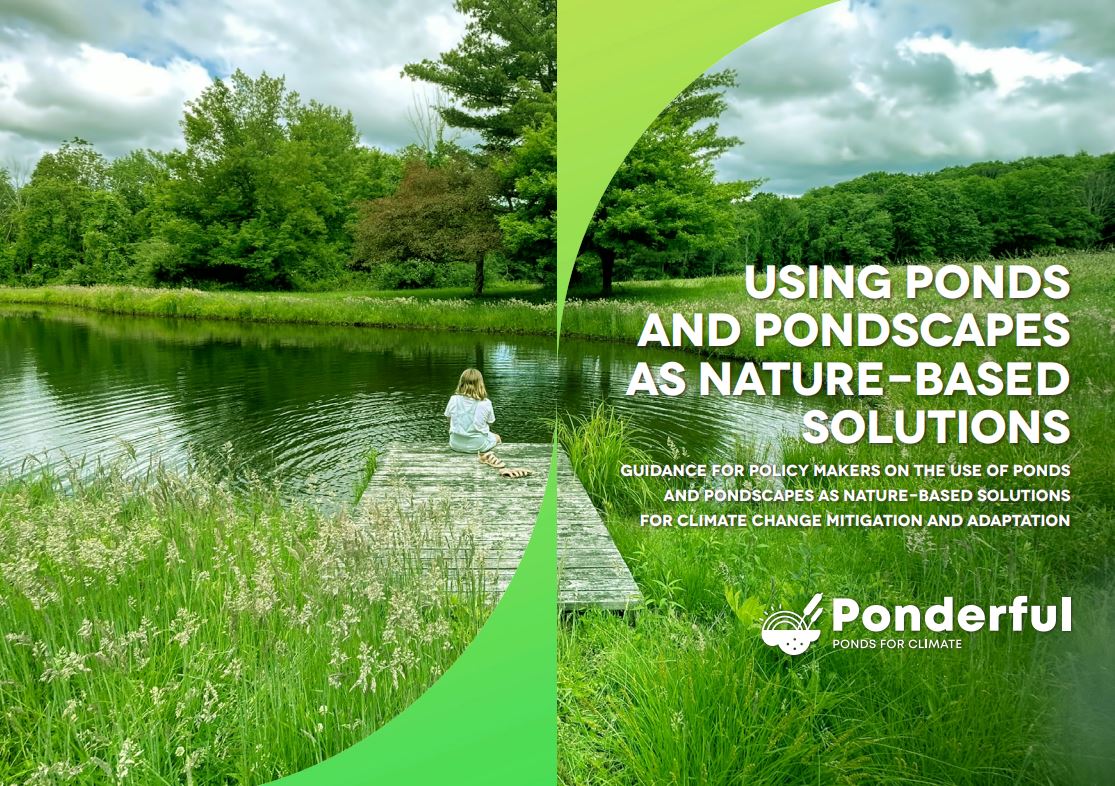
Biggs, J., Hoyle, Matos, I., Oertli, B., Teixeira, J. (2024). Using ponds and pondscapes as nature-based solutions. Guidance for policy makers on the use of ponds and pondscapes as nature-based solutions for climate change mitigation and adaptation, EU Horizon 2020 Ponderful project, University of Vic – Central University of Catalonia. https://doi.org/10.5281/zenodo.13847395
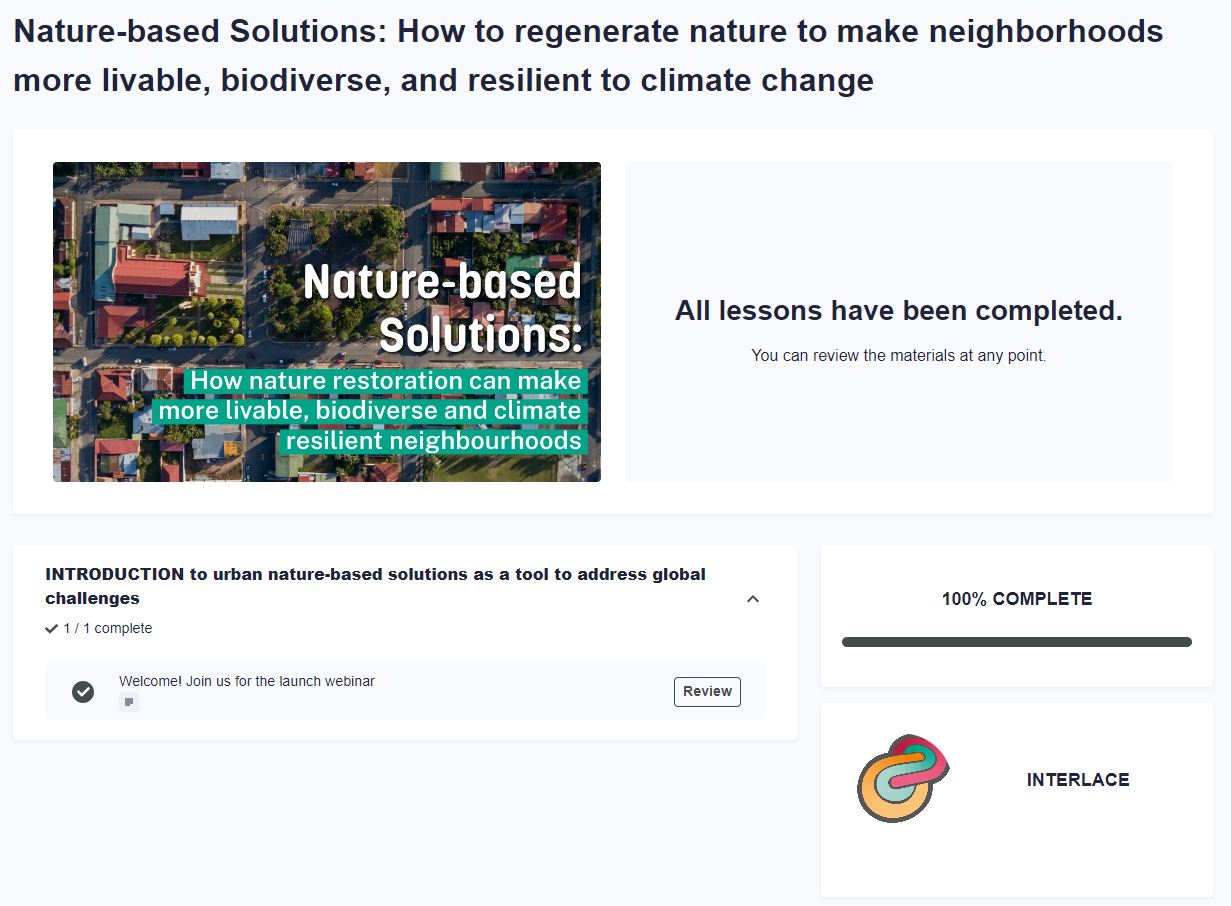
INTERLACE 2024: Nature-based Solutions: How to regenerate nature to make neighborhoods more livable, biodiverse, and resilient to climate change. Massive Open Online Course. Online: https://learningwith.uclg.org/p/restoring-urban-ecosystems.
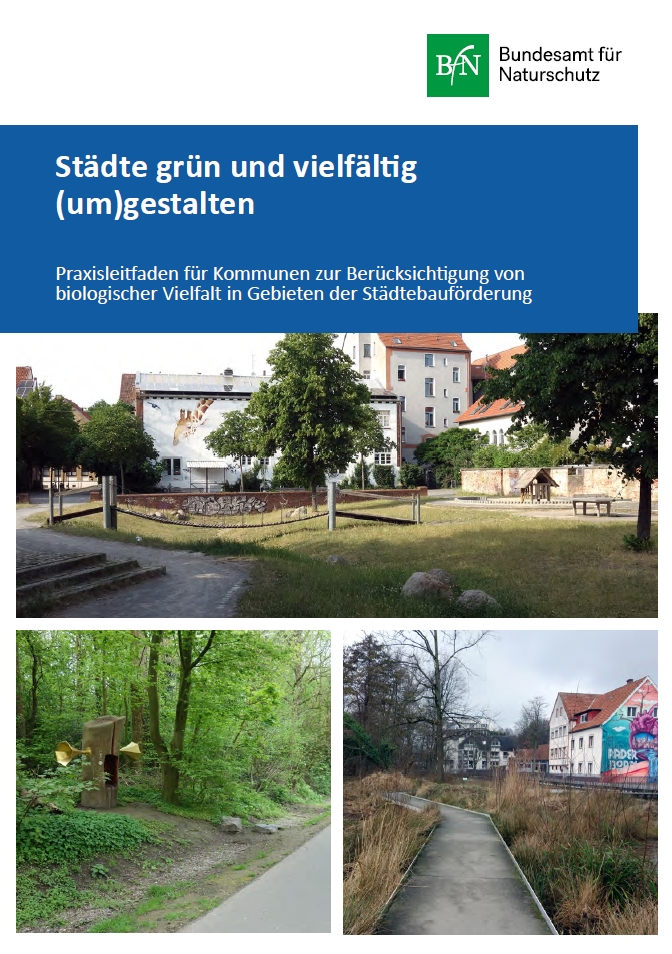
Bundesamt für Naturschutz (Hrsg.) (2024): Städte grün und vielfältig (um)gestalten. Praxisleitfaden für Kommunen zur Berücksichtigung von biologischer Vielfalt in Gebieten der Städtebauförderung. Bonn.

German Federal Agency for Nature Constervation (ed.) (2024): Urban Nature Plan: Considering quality of life, climate and biodiversity together! A guide to implementing the EU Biodiversity Strategy 2030 in urban areas. Bonn.
Kupilas, Benjamin, et al. (2024): Compilation of existing guidance on ecosystem restoration. Ecologic Institute, Berlin.
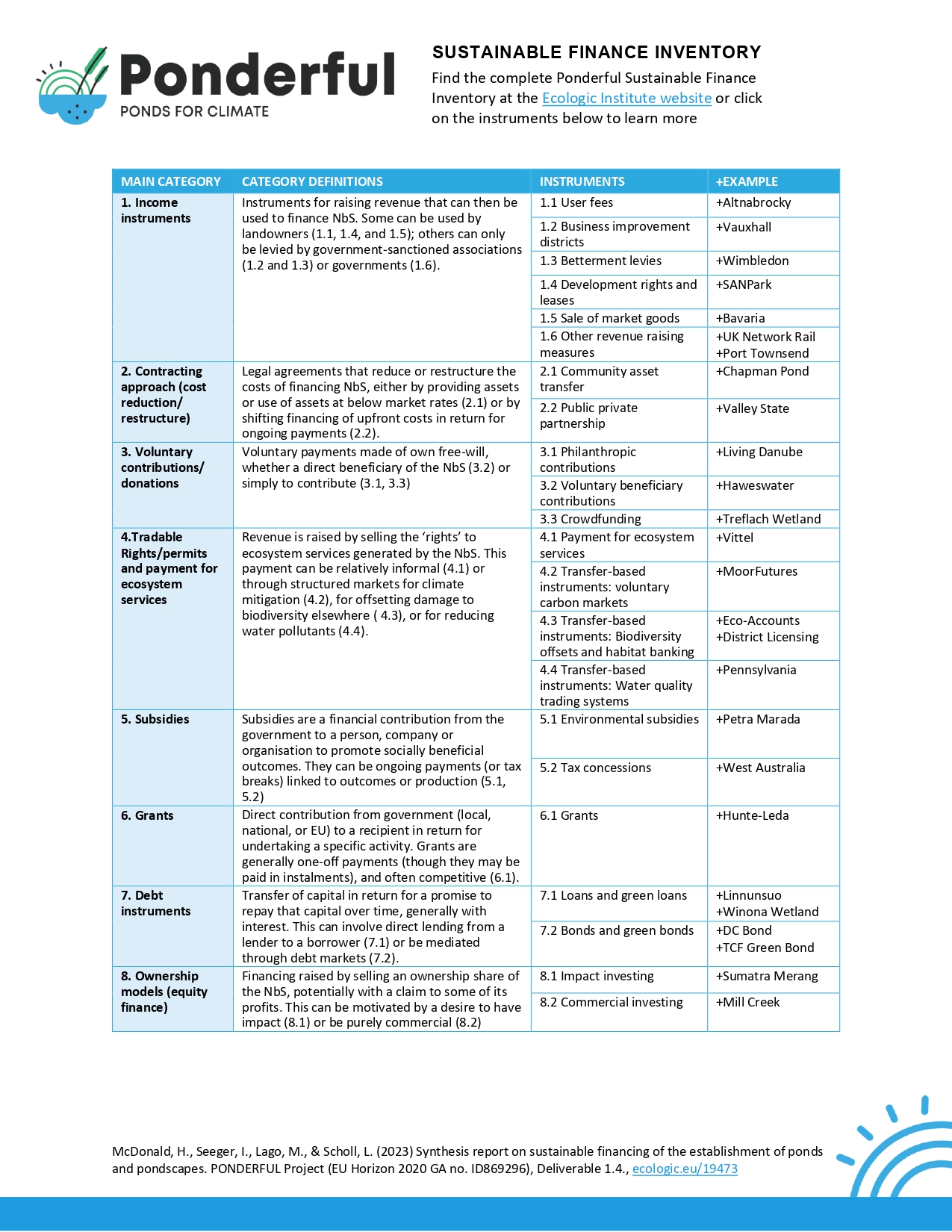
McDonald, H., Seeger, I., Lago, M., & Scholl, L. (2023) Synthesis report on sustainable financing of the establishment of ponds and pondscapes. PONDERFUL Project (EU Horizon 2020 GA no. ID869296), Deliverable 1.4.
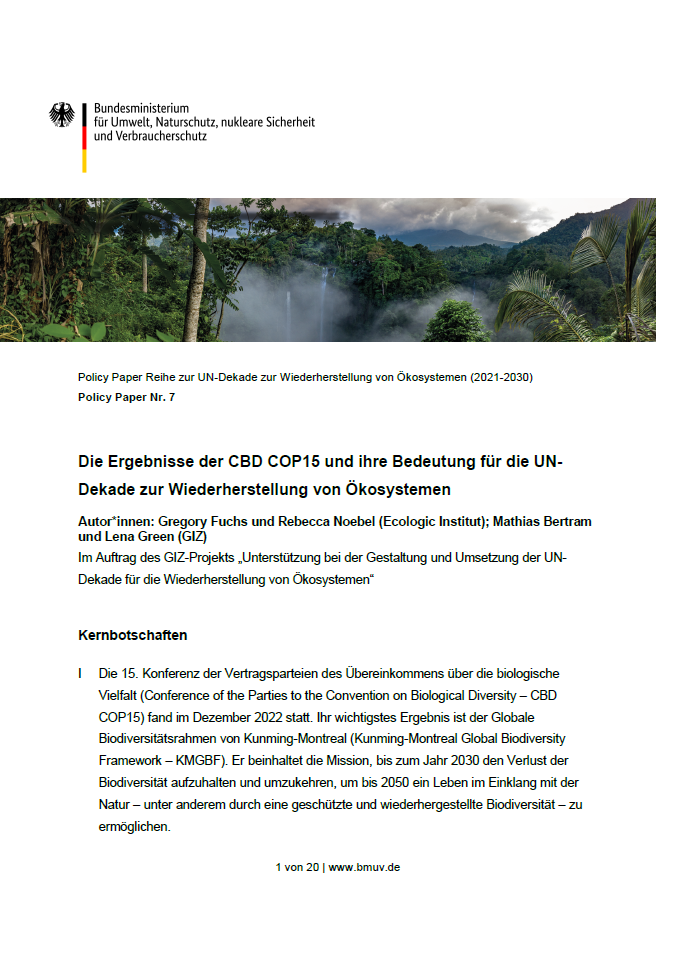
Fuchs, Gregory et al. 2023: Die Ergebnisse der CBD COP15 und ihre Bedeutung für die UN-Dekade zur Wiederherstellung von Ökosystemen. Papier Nr. 7 der Policy Paper Reihe zur UN-Dekade für die Wiederherstellung von Ökosystemen (2021-2030). Federal Ministry for the Environment, Nature Conservation, Nuclear Safety and Consumer Protection, Berlin.
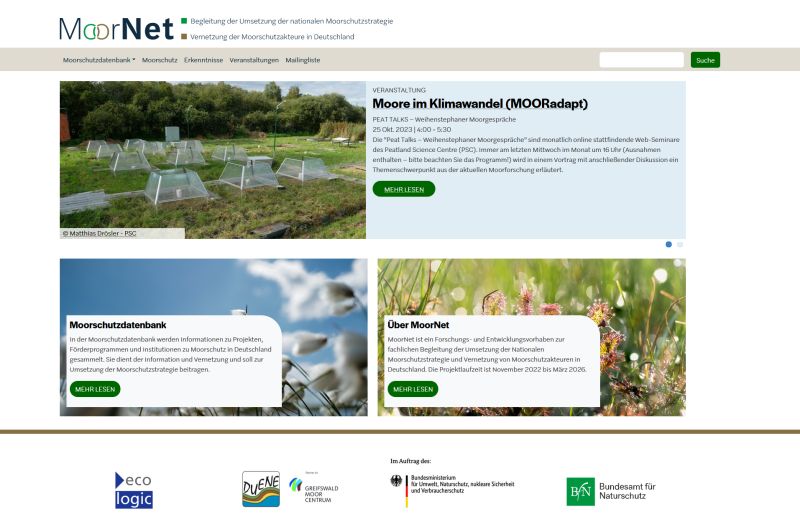
Ecologic Institute (2023): MoorNet. Website. URL: https://moor-net.de
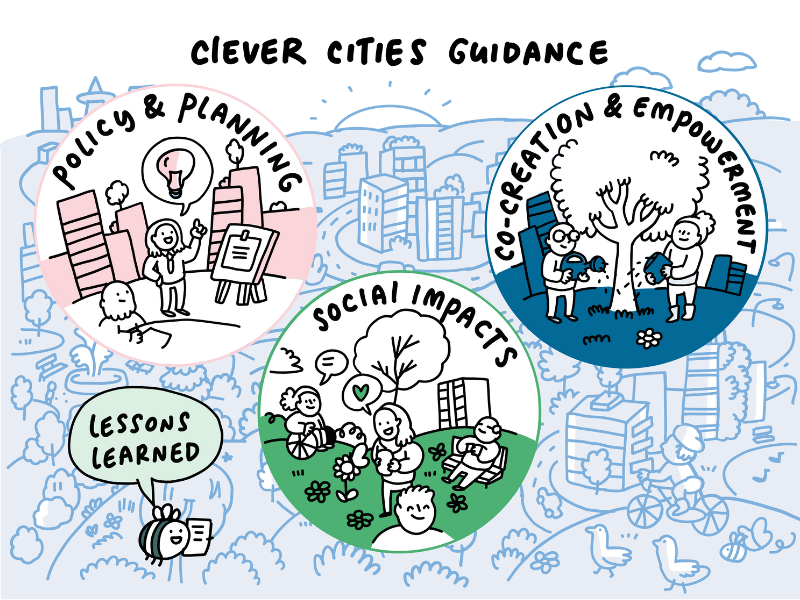
CLEVER Cities 2023: CLEVER Cities Guidance. Website. Online: https://clever-guidance.clevercities.eu
European Commission, Directorate-General for Research and Innovation, Naumann, S., Burgos Cuevas, N., Davies, C., et al., Harnessing the power of collaboration for nature-based solutions : new ideas and insights for local decision-makers, Publications Office of the European Union, 2023, https://data.europa.eu/doi/10.2777/954370
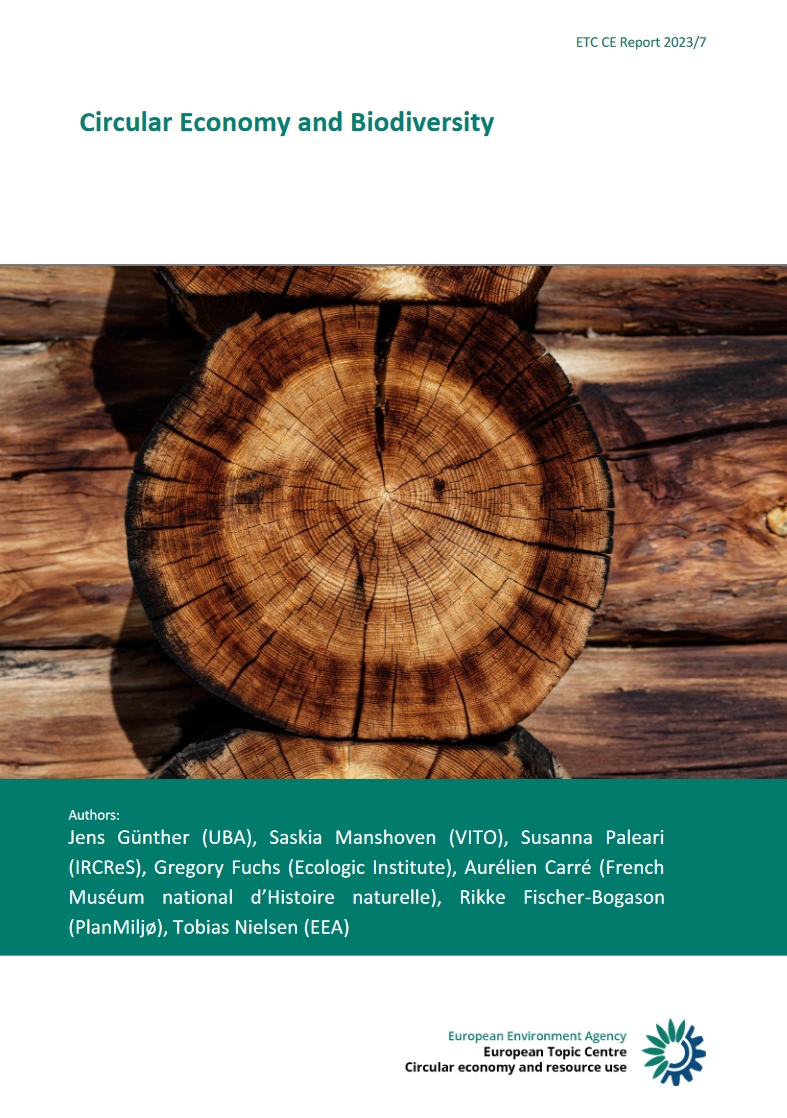
Günther, Jens et al. 2023: Circular Economy and Biodiversity. ETC CE Report 2023/7. European Topic Centre on Circular economy and resource use.
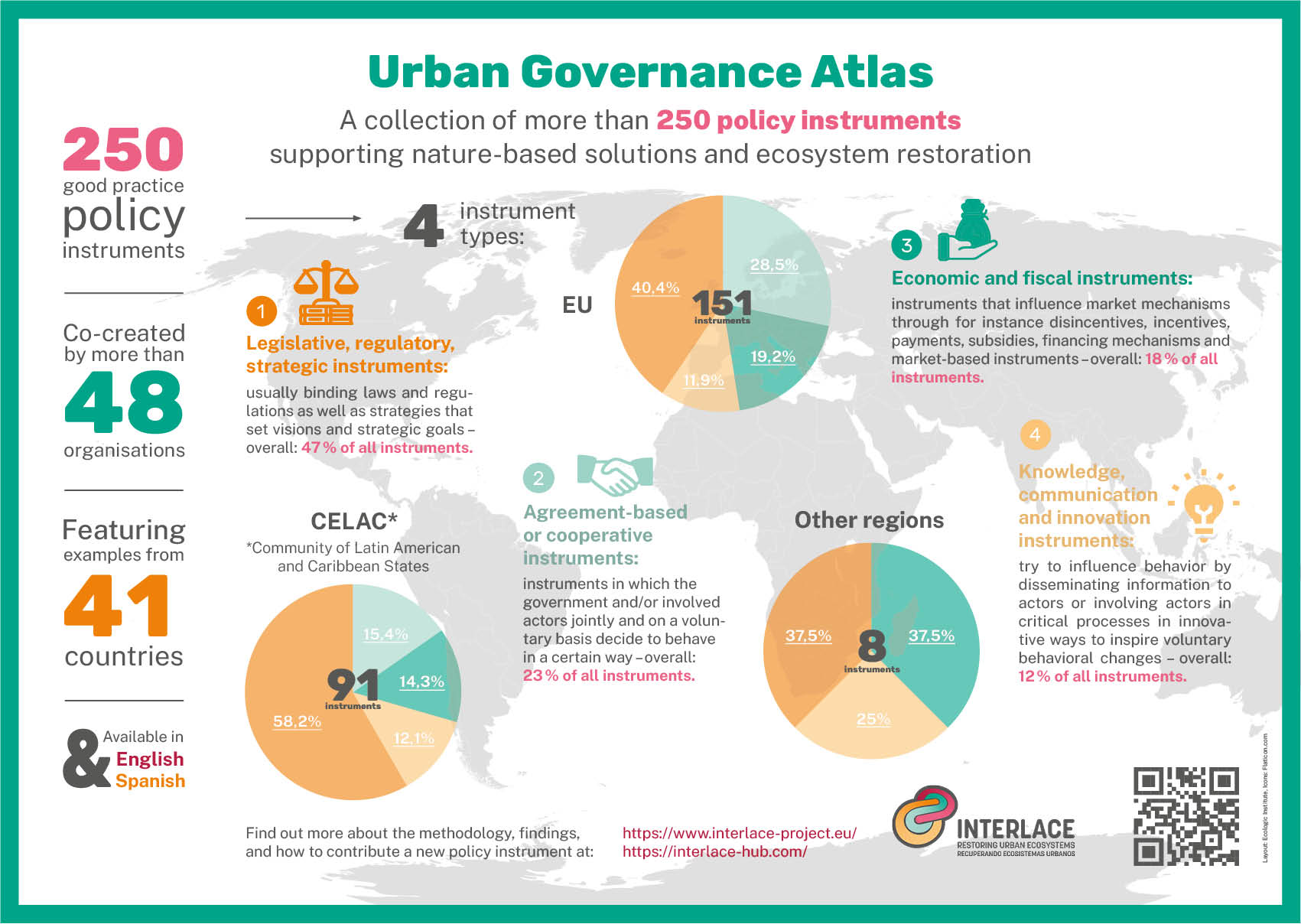
INTERLACE project consortium 2023: Urban Governance Atlas. Interactive database. Published on 11 May 2023. Online: https://interlace-hub.com/urban-governance-atlas.
Ecologic Institute 2023: Nature Restoration Law: restoring Europe's ecosystems & protecting biodiversity. Online: https://youtu.be/a6PBxwGbvvQ?si=TILztXqSIMKJvdZO
Selected Events for Biodiversity
Workshop:Transformation of Berlin's Rainwater Management through NbS
- Date
-
- Location
- Berlin, Germany
Conference:MoorNet Conference: The role of nature conservation and climate protection in peatland protection
- Date
-
-
- Location
- Bonn, Germany

Digital Event:Creating More Livable, Biodiverse and Climate Resilient Cities with Nature-based Solutions
- Date
-
- Location
- online
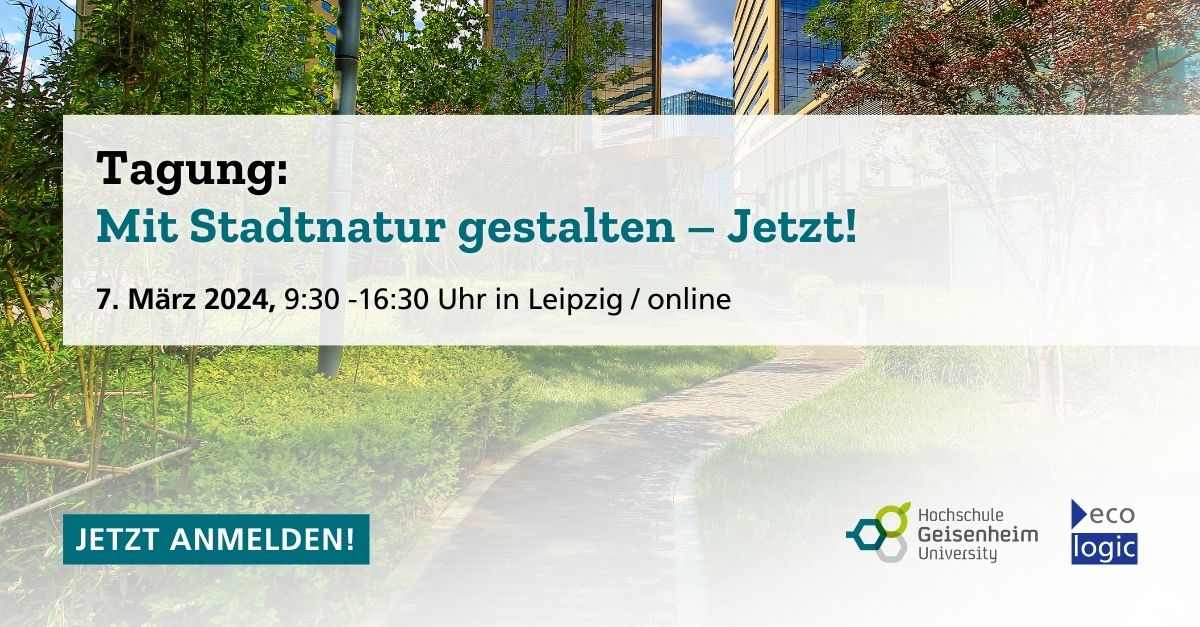
Conference:Shaping Urban Nature – Now!
- Date
-
- Location
- online and Leipzig, Germany
Conference:Biodiversity and Climate Change – Exploring Synergies
- Date
-
-
- Location
- Berlin, Germany
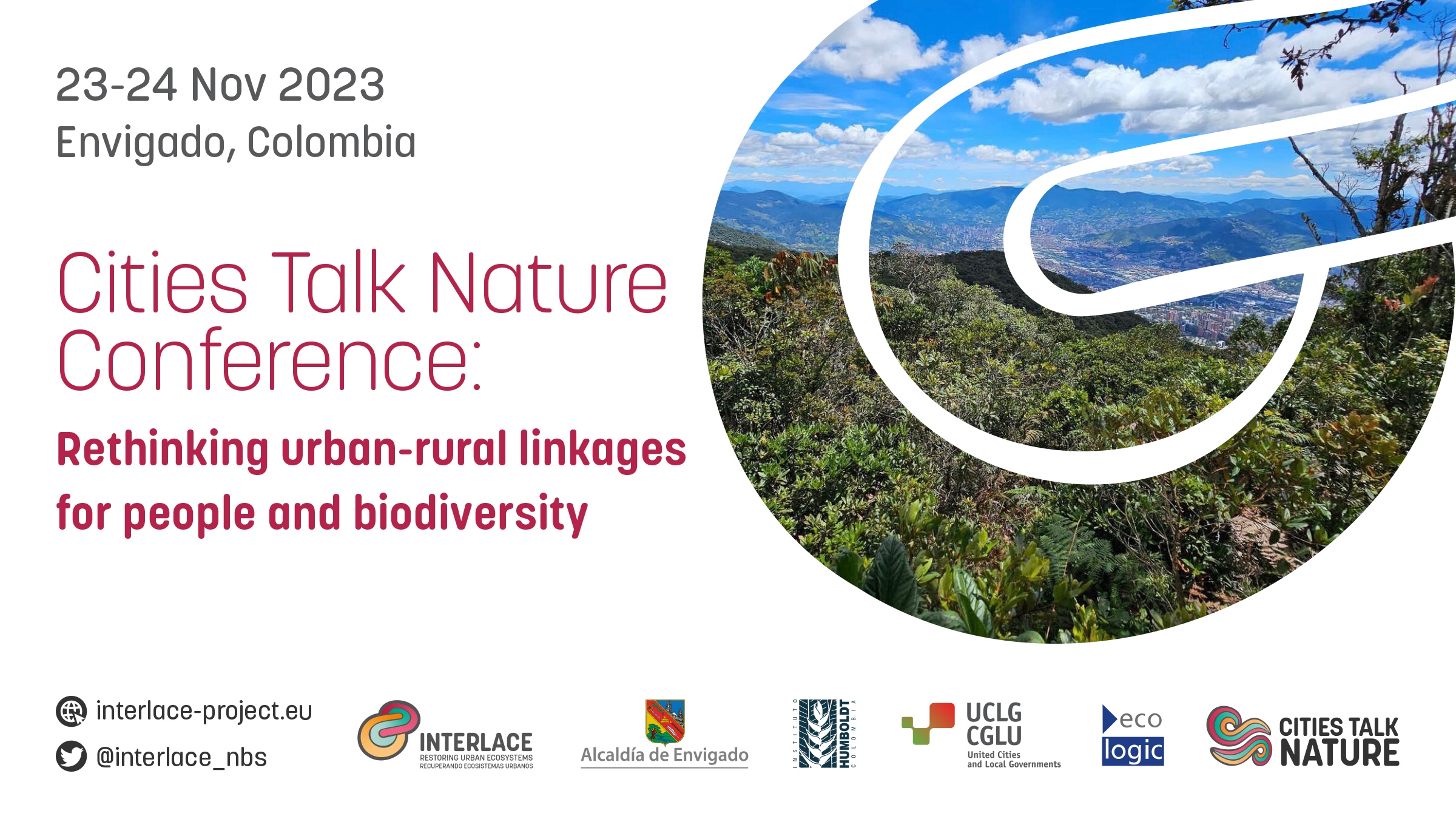
Conference:Rethinking Urban-rural Linkages for People and Biodiversity
- Date
-
-
- Location
- Envigado, Colombia
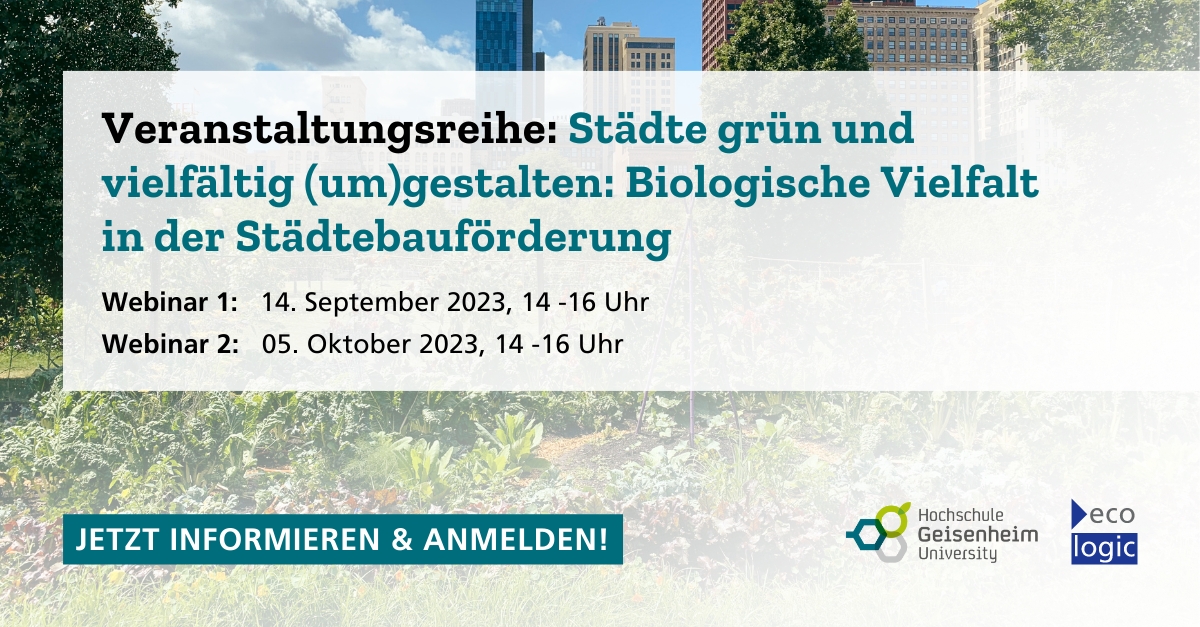
Digital Event:Consider Biodiversity in Urban Development Areas
- Date
-
- Location
- online
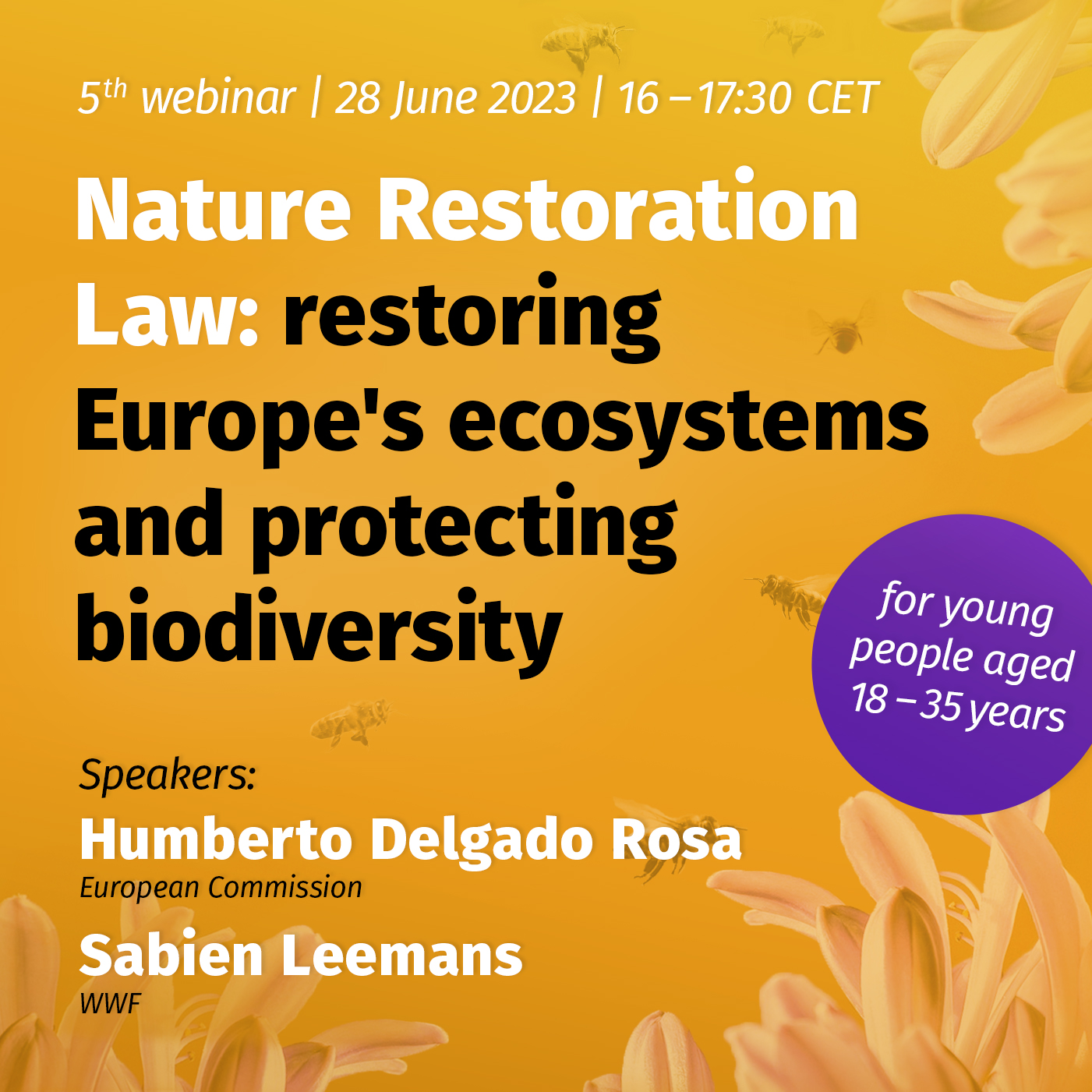
Digital Event:Nature Restoration Law: Restoring Europe's ecosystems and protecting biodiversity
- Date
-
- Location
- online
Digital Event:Fit for Summer
- Date
-
- Location
- online
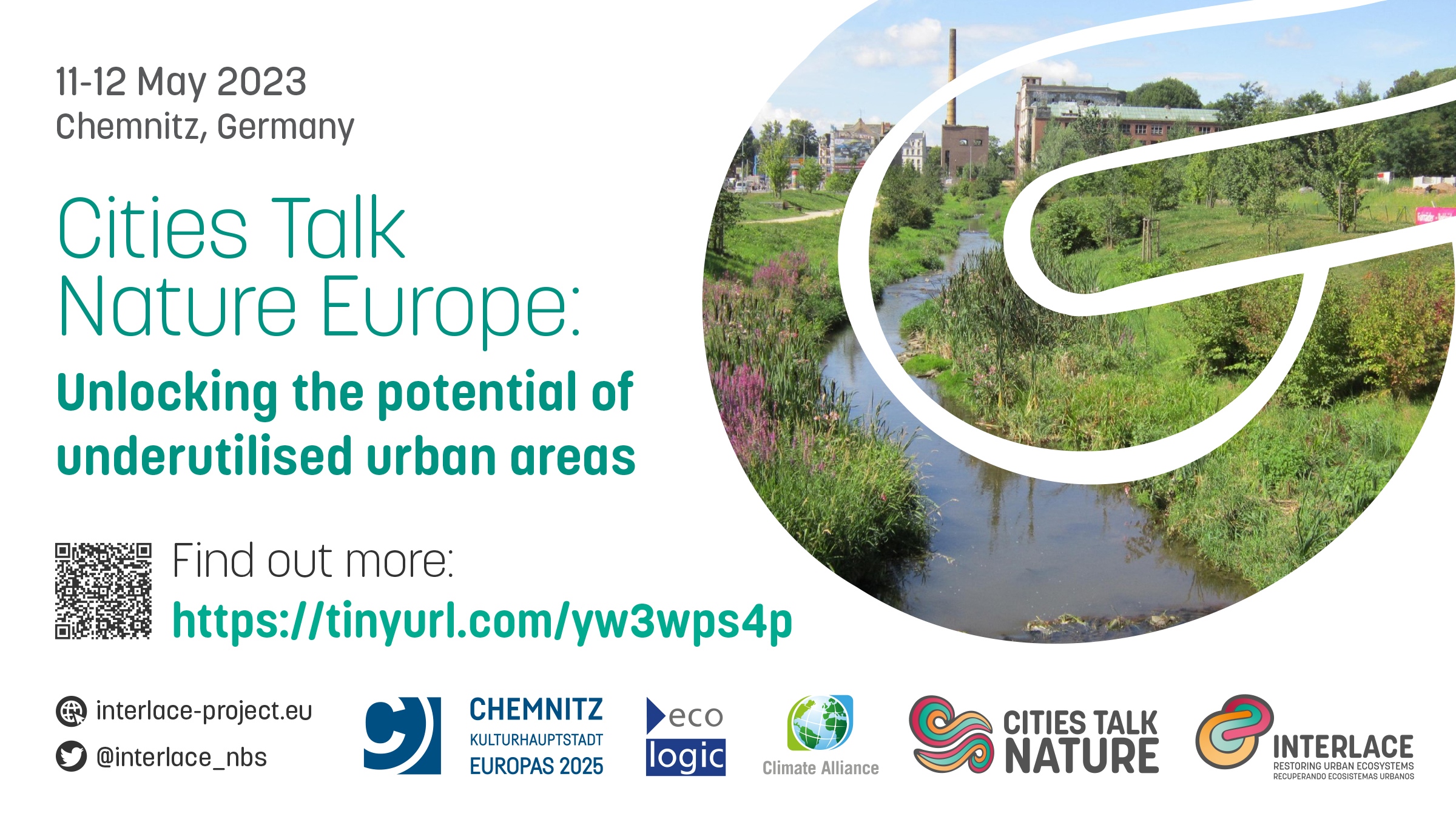
Conference:Cities Talk Nature Conference: Unlocking the potential of underutilised urban areas
- Date
-
-
- Location
- Chemnitz, Germany
Selected Presentations for Biodiversity
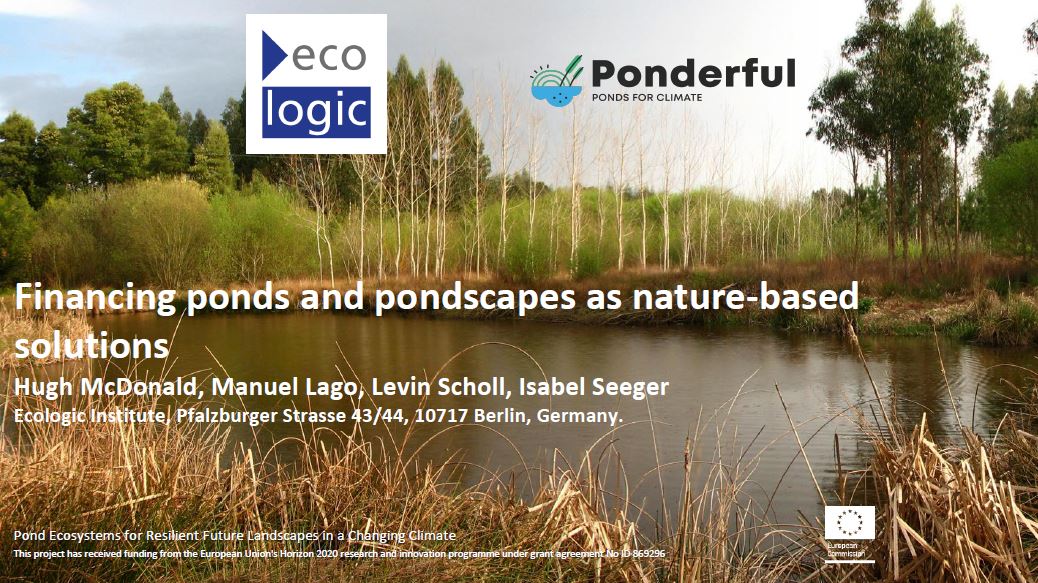
Speech:Financing Ponds and Pondscapes as Nature-based Solutions
- Date
-
- Location
- online
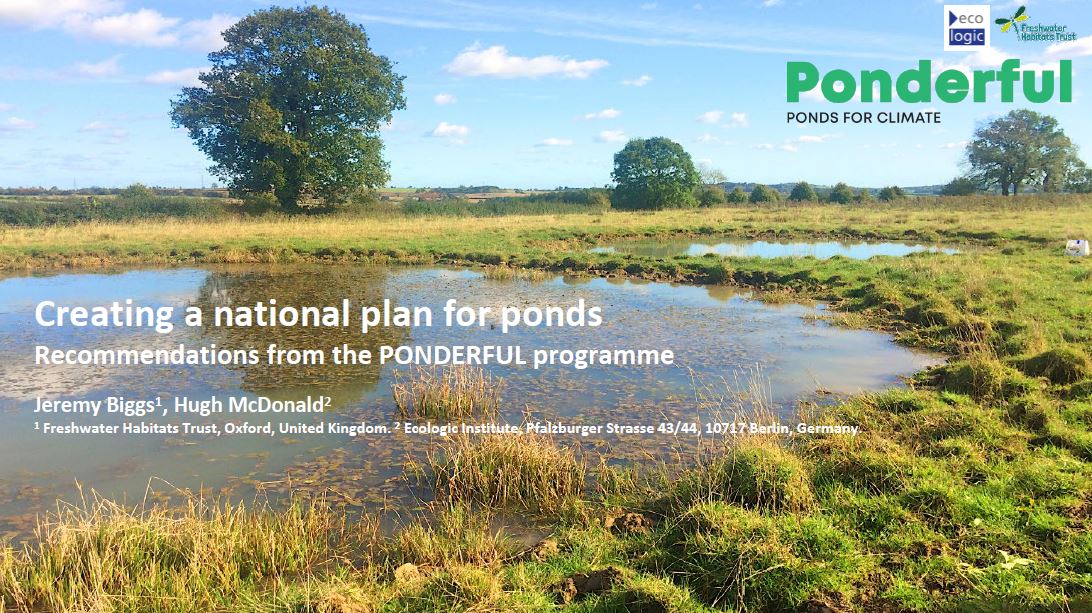
Speech:Creating a National Plan for Ponds
- Date
-
- Location
- online
Speech:Ecologic Team Active at the Network Nature Annual Events in Brussels
- Date
-
-
- Location
- Brussels, Belgium
Speech:Advancing Ecosystem-Based Management and Nature-Based Solutions – Workshop Series
- Date
-
-
- Location
- Vilm, Germany
Speech:Compilation of Existing Guidance on Ecosystem Restoration
- Date
-
- Location
- online
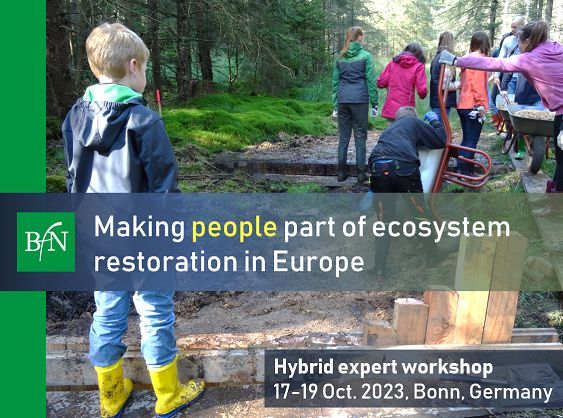
Speech:Creating Enabling Conditions for Ecosystem Restoration
- Date
-
- Location
- online and Bonn, Germany
Lecture:Marine and Coastal Ecosystem Restoration
- Date
-
-
- Location
- online