Agriculture
How food is produced has wide-reaching impacts on the environment and our ability to mitigate and adapt to the climate crisis. Intensification of agriculture has been a principal driver of soil degradation, water pollution, and biodiversity loss in the EU. It is widely recognized that agriculture needs to move away from overreliance on chemical interventions towards agroecological principles and nature-based solutions in order to protect rather than degrade ecosystem health.
Ecologic Institute works to support the transition towards agricultural systems that protect soils and other ecosystems, reduce greenhouse gas emissions, and enhance natural carbon sinks. Drawing on a robust scientific evidence base and working closely with stakeholders, our work comprises four main areas:
We assess and inform EU policies that drive agriculture’s impact on soil health, water quality, and climate, in particular the Common Agricultural Policy, Water Framework Directive, and climate policies.
We inform and co-design efforts to scale up solutions and capacity building for mitigation and adaptation in agriculture.
We support the development of transformation pathways to reduced use of pesticides and zero pollution from agriculture.
We inform strategic research agendas to deliver the necessary knowledge and capacity for sustainable agriculture.
Our work centers on win-win solutions that benefit climate, ecosystems, and the adaptive capacity of farmers and societies.
















Selected Projects for Agriculture
Assistance in Developing Criteria on Agricultural Activities to be Included in the EU Sustainable Finance Taxonomy
- Duration
-
-
- Funding
-
European Commission, Directorate-General for Financial Stability, Financial Services and Capital Markets Union (DG FISMA), International
Coordination of International Research Cooperation on soil Carbon Sequestration in Agriculture (CIRCASA)
- Duration
-
-
- Funding
-
European Commission, Directorate-General Research & Innovation (DG Research & Innovation), International
Preventing and Remediating Soil Degradation (RECARE)
- Duration
-
-
- Funding
-
European Commission, Directorate-General Research & Innovation (DG Research & Innovation), International
Updated Inventory and Assessment of Soil Protection Policy Instruments in EU Member States
- Duration
-
-
- Funding
-
European Commission, Directorate-General Environment (DG Environment), International
Sustainable and Climate Friendly Soil Management (SmartSOIL)
- Duration
-
-
- Funding
-
European Commission, Directorate-General Research & Innovation (DG Research & Innovation), International
Selected Publications for Agriculture
EU Technical Expert Group on Sustainable Finance (ed.) 2019: Financing a Sustainable European Economy. Taxonomy. Technical Report. European Commission: Brussels.
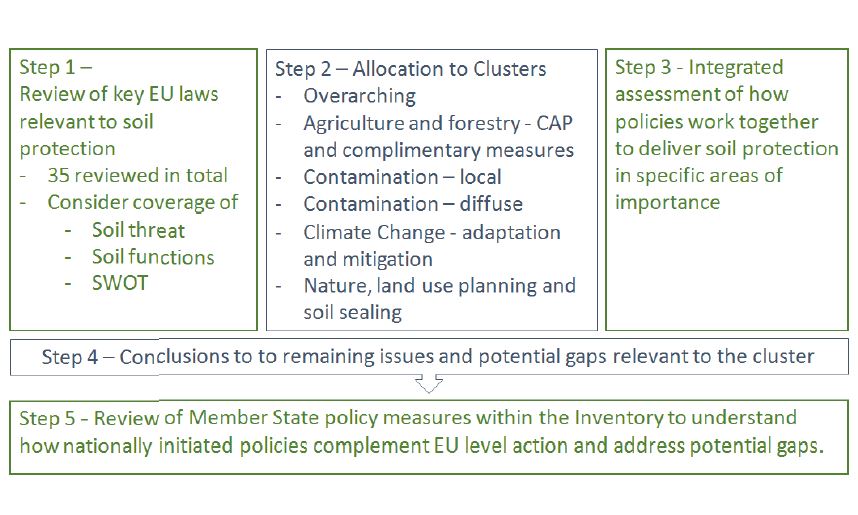
Frelih-Larsen, A., C. Bowyer, S. Albrecht, C. Keenleyside, M. Kemper, S. Nanni, S. Naumann, R., D. Mottershead, R. Landgrebe, E. Andersen, P. Banfi, S. Bell, I. Brémere, J. Cools, S. Herbert, A. Iles, E. Kampa, M. Kettunen, Z. Lukacova, G. Moreira, Z. Kiresiewa, J. Rouillard, J. Okx, M. Pantzar, K. Paquel, R. Pederson, A. Peepson, F. Pelsy, D. Petrovic, E. Psaila, B. Šarapatka, J. Sobocka, A.-C. Stan, J. Tarpey, R. Vidaurre (2016). ‘Updated Inventory and Assessment of Soil Protection Policy Instruments in EU Member States.’ Final Report to DG Environment. Berlin: Ecologic Institute.
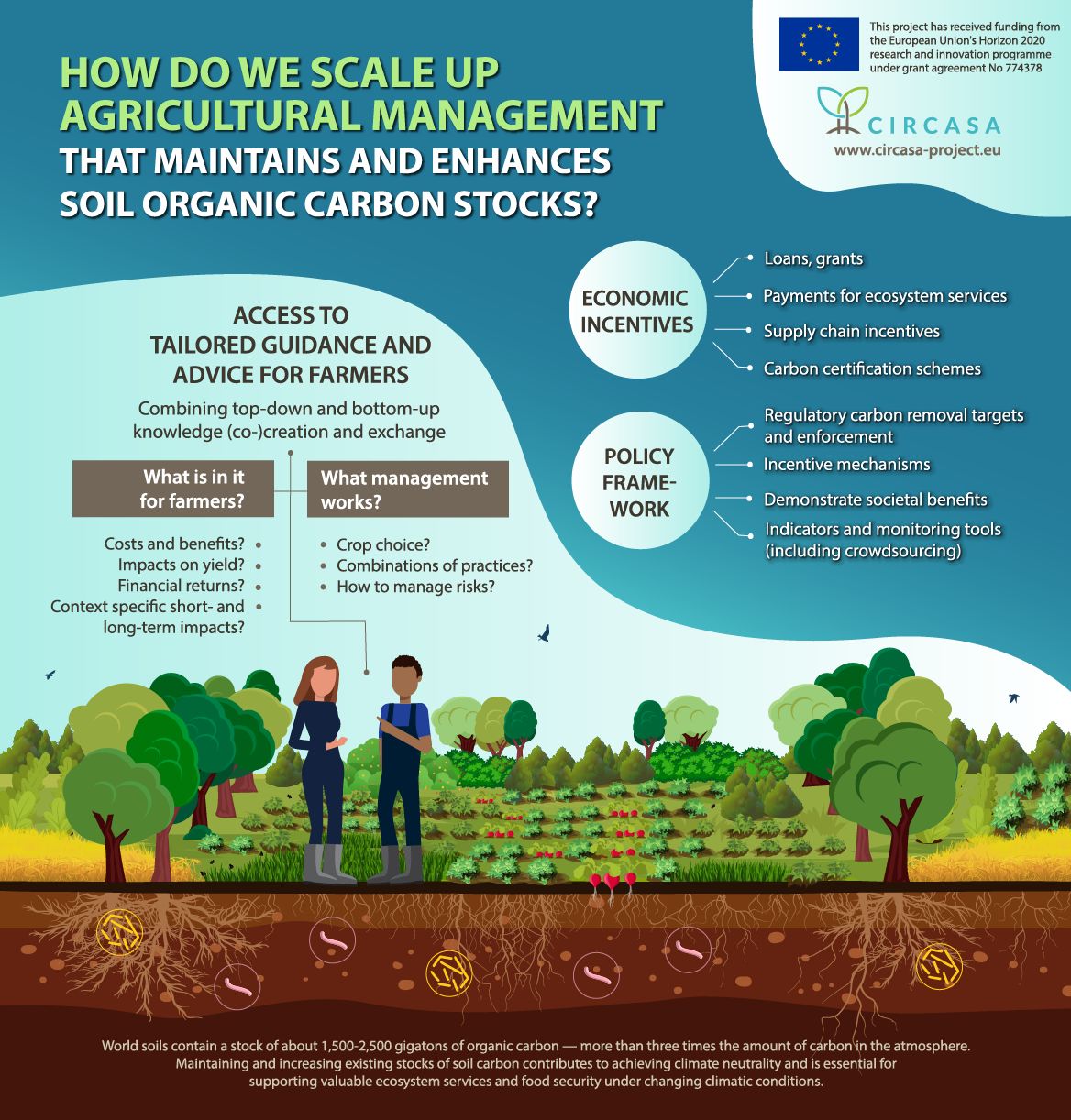
CIRCASA 2020. Deliverable D2.3: "Synthesis report on knowledge demands and needs of stakeholders". DOI: https://doi.org/10.15454/Q0XVVD
Selected Events for Agriculture
Workshop:Carbon Farming Schemes in Europe – Roundtable
- Date
-
- Location
- Brussels, Belgium
Conference:Preventing and Remediating Degradation of Soils in Europe – RECARE Final Policy Conference
- Date
-
- Location
- Brussels, Belgium