Energy
The climate crisis threatens the very foundation of modern society. To avert it, the global economy needs to fully decarbonize within a generation. In this formidable challenge, energy consumption takes center stage as power plants, vehicles, and buildings generate the majority of EU emissions. Mature low-carbon technologies and practices exist, but they require new regulation and incentives to be scaled up successfully. Ecologic Institute's research focuses on building a framework for energy sector decarbonization.
Using its skills in legal, economic, and indicator-based analysis, the energy team assesses and designs effective energy policies at all government levels. To this end, we regularly debate solutions with relevant practitioners and stakeholders. A central research area is EU energy regulation and its interaction with the German energy transition.
The team's expertise includes renewable energy and efficiency, electricity market design, the coal exit, and sector coupling, i.e. at the interface between power, transport, and heating. Our legal work focuses on EU energy law and its transposition into national law and the legal challenges arising from digitalization.
Capacity building and education on the energy transition is another cornerstone of our work. Only with a wider understanding of the need for change and its implications for each single household will countries succeed in transforming their energy sectors.
In interdisciplinary projects, the energy team also studies nexus issues, including on questions related the resource needs of the energy transition or interlinkages between energy measures and needs to adapt to climate change.











Selected Projects for Energy
Evidence-based Assessment for the Design of the German Energy Transition (Ariadne)
- Duration
-
-
- Funding
-
Federal Ministry of Education and Research (BMBF), Germany
European Climate Neutrality Observatory (ECNO)
- Duration
-
-
- Funding
-
European Climate Foundation (ECF), International
Impact Assessment of the Governance Regulation Revision
- Duration
-
-
- Funding
-
European Commission, Directorate-General Energy (DG Energy), International
Transformation of the EU Energy System
- Duration
-
-
- Funding
-
European Environment Agency (EEA), International
Assessment of the European Commission's Assumptions about Industrial Removals for the 2040 Target
- Duration
-
-
- Funding
-
European Climate Foundation (ECF), International
EU Policies to Reduce CH4 and H2 Emissions from the Energy Sector
- Duration
-
-
- Funding
-
Stichting Environmental Defense Fund Europe (EDF Europe), Netherlands
Analysis of the Implementation of EU Provisions for the Clean Energy Transition in Selected Member States
- Duration
-
-
- Funding
-
European Climate Foundation (ECF), International
Assessing Policy Evaluations in the Context of the National Energy and Climate Plans (NECPs)
- Duration
-
-
- Funding
-
German Environment Agency (UBA), Germany
ElectricityNeighbours – Can tenants in Berlin's apartment buildings become prosumers through solar power projects and sector coupling?
- Duration
-
-
- Funding
-
Governing Mayor of Berlin, Senate Chancellery , Germany
Energy Prosumption in Europe
- Duration
-
-
- Funding
-
European Environment Agency (EEA), International
Exploring the Socio-economic Impact of Energy Transition in EU Regions
- Duration
-
-
- Funding
-
European Parliament, The Greens/European Free Alliance (The Greens / EFA in the EP), International
Event Series on the European Energy Transition
- Duration
-
-
- Funding
-
European Climate Foundation (ECF), International
Phasing Out Coal in Germany and Chile: A Comparative Analysis
- Duration
-
-
- Funding
-
Deutsche Gesellschaft für Internationale Zusammenarbeit (GIZ), Germany
Selected Publications for Energy

Raffaele Piria, Kacper Szulecki, Hannah Lentschig and Louise van Schaik: Europe’s Selective Blindness on Gas: US LNG and the Limits of Supply Diversification. Clingendael, Ecologic Institute, Norwegian Institute of International Affairs, The Hague/Berlin/Oslo, 2026.
Piria, Raffaele: Penalty regimes for violations of the EU Methane Regulation across EU Member States. Ecologic Institute, 2025, Berlin.
Agora Energiewende and Ecologic Institute (2025): Europe’s energy security on the path to climate neutrality: Devising a resilience strategy for the mid-transition

Velten, Eike Karola et al. 2025: 2025 Flagship Report: State of EU progress to climate neutrality. An indicator-based assessment across 13 building blocks for a climate neutral future. European Climate Neutrality Observatory (ECNO).

European Environment Agency, Renewables, electrification and flexibility for a competitive EU energy system transformation by 2030, Publications Office of the European Union, 2025, https://data.europa.eu/doi/10.2800/4558900

Hijman, Remko et al. (ed.) 2025: Sustainable Development in the European Union. Monitoring Report on Progress Towards the SDGs in an EU Context. [eurostat Statistical books 2025 edition]. Luxembourg: Publications Office of the European Union.

Velten, Eike Karola; Decker, Benedikt; Felthöfer, Charlotte; Meyer-Ohlendorf, Nils (2025): Industrial removals' resource use in the 2040 climate target impact assessment – An analysis of biomass, electricity, and water needs for Bioenergy and Direct Air Carbon Capture and Storage (BECCS and DACCS) in the EU Commission's Impact Assessment of the 2040 target. Ecologic Institute, Berlin.
Michael Pahle, Ulrich Fahl, Benjamin Görlach, Ronja Busch, Simon Feindt, Nikolas Messerschmidt, Jana Nysten, Sebastian Osorio, Darius Sultani et al. (2025): Staying the course in turbulent times: Insights on the current state and ways forward for the EU's climate, energy and finance policy architecture. Kopernikus-Projekt Ariadne, Potsdam. DOI: 10.48485/pik.2025.008
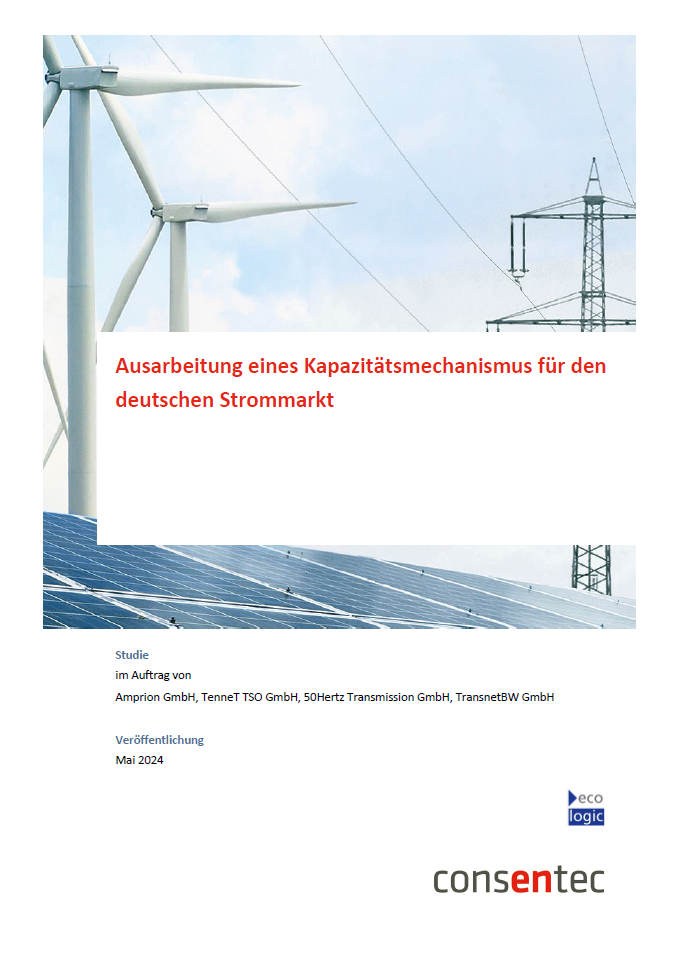
Consentec GmbH and Ecologic Institut (2024): Ausarbeitung eines Kapazitätsmechanismus für den deutschen Strommarkt. Aachen and Berlin: Consentec GmbH and Ecologic Institut.
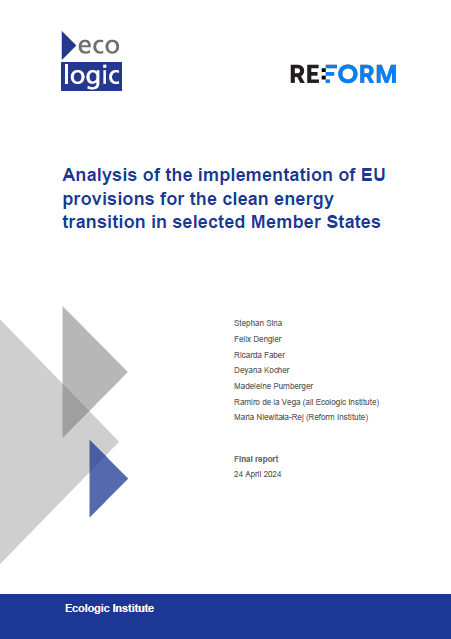
Sina, Stephan et al. 2024: Analysis of the implementation of EU provisions for the clean energy transition in selected Member States. Ecologic Institute, Berlin.
Velten, Eike Karola; Decker, Benedikt; Felthöfer, Charlotte; Meyer-Ohlendorf, Nils (2025): Industrial removals' resource use in the 2040 climate target impact assessment – An analysis of biomass, electricity, and water needs for Bioenergy and Direct Air Carbon Capture and Storage (BECCS and DACCS) in the EU Commission's Impact Assessment of the 2040 target. Ecologic Institute, Berlin.
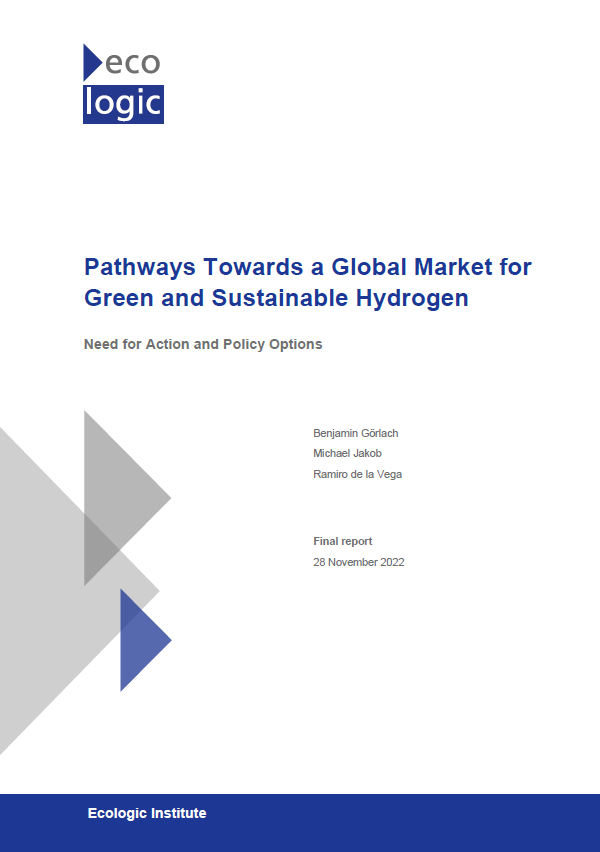
Görlach, Benjamin, Michael Jakob and Ramiro de la Vega (2022): Pathways Towards a Global Market for Green and Sustainable Hydrogen. Need for Action and Policy Options. Ecologic Institute, Berlin.
Eisenmann, Lothar, Muckenfuss, Lisa, Knoblauch, Doris, Nütz, Felix 2023: Evaluation 2020/2021 der Masterplan-Kommunen 2016, Förderrichtlinie „Masterplan 100 % Klimaschutz“. Bericht zum Vorhaben Evaluation, Begleitung und Anpassung bestehender Förderprogramme sowie Weiterentwicklung der Nationalen Klimaschutzinitiative (NKI). Oeko-Institut: Berlin.
Knoblauch, Doris, Noebel, Rebecca, Safaricz, Nizara, Paar, Angelika, Hecker, Clemens 2023: Evaluation 2020/2021 der Förderrichtlinie „Kommunale Energieeffizienz- und/oder Ressourceneffizienz-Netzwerke“ im Rahmen der Nationalen Klimaschutzinitiative (NKI). Bericht zum Vorhaben Evaluation, Begleitung und Anpassung bestehender Förderprogramme sowie Weiterentwicklung der Nationalen Klimaschutzinitiative (NKI). Ecologic Institute: Berlin. IFEU: Berlin.
Faber, R., Dück L.M., Reichwein, D. (2023): Germany’s delayed electricity smart meter rollout and its implications on innovation, infrastructure, integration, and social acceptance. An ex-post analysis. National Case Study of the 4i-TRACTION Deliverable D2.6. Ecologic Institute. Berlin
Selected Events for Energy
Digital Event:Reality Checking the Clean Industrial Deal
- Date
-
- Location
- online
Digital Event:Tracking the Transition to a Clean, Competitive and Fair EU Future
- Date
-
- Location
- online
Conference:Staying the Course in Turbulent Times
- Date
-
-
- Location
- Brussels, Belgium
Conference:ECNO Launch Event: Annual Flagship Report 2024
- Date
-
- Location
- Brussels, Belgium
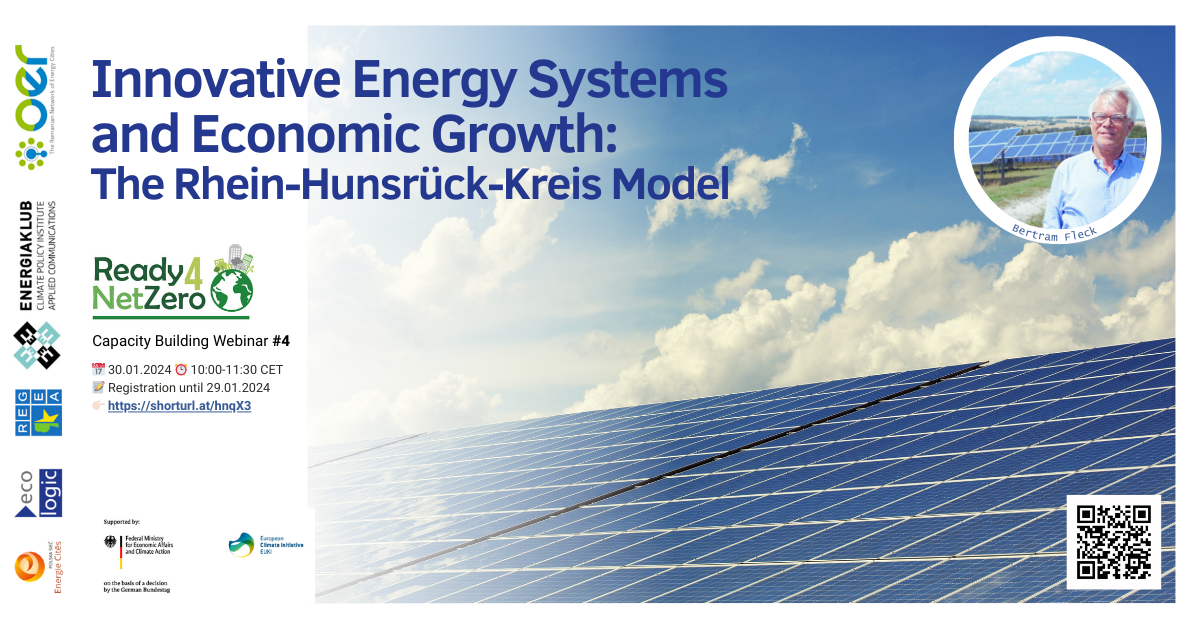
Digital Event:Innovative Energy Systems and Economic Growth: Realizing Regional Value in Climate Protection
- Date
-
- Location
- online
Conference:Shaping EU Climate and Energy Policy
- Date
-
-
- Location
- Brussels, Belgium
Digital Event:Europe's Energy Transition – Rolling out renewables and infrastructure
- Date
-
- Location
- online
Digital Event:Models for the Generation and Use of PV Electricity for Multi-party Buildings
- Date
-
- Location
- Berlin, Germany
Visitors Program:How is the EU Balancing Climate Action and the Energy Crisis?
- Date
-
-
- Location
- Brussels, Belgium
Conference:Shaping EU Climate and Energy Policy: Insights from and for the Ariadne Project
- Date
-
-
- Location
- Brussels, Belgium
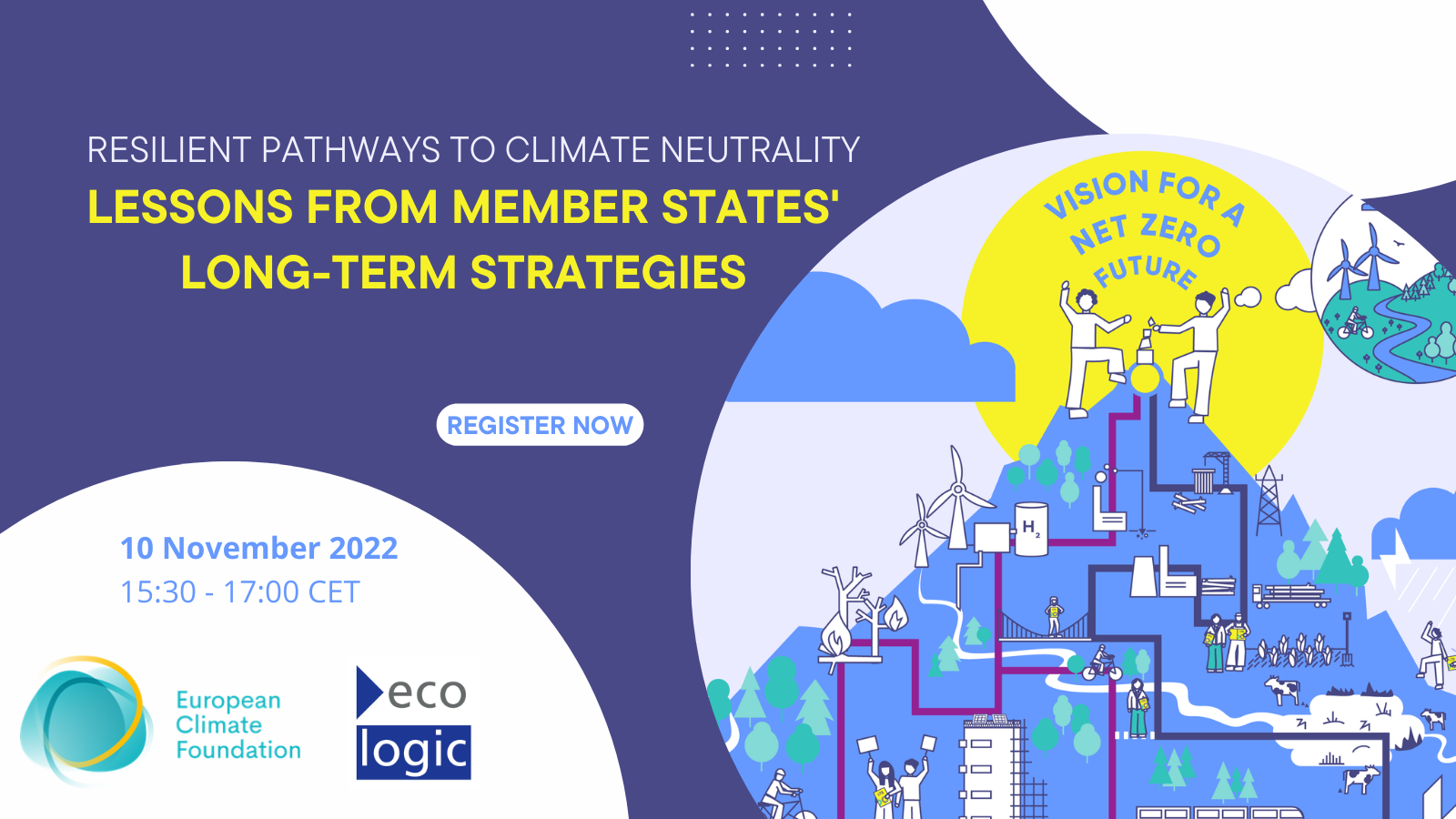

Digital Event: Resilient Pathways to Climate Neutrality
- Date
-
- Location
- online
Digital Event:Energy Managers and Energy Management at District Level
- Date
-
- Location
- online